
You want to understand EGS technology vs hydraulic fracturing because both methods shake the ground—literally. I have spent months tracking real-world data from geothermal projects in Switzerland, South Korea, and the United States.
The difference between these two stimulation techniques is not just about water usage. It is about earthquake risk. One method has shut down entire city projects.
The other is learning how to break rock without breaking buildings. This comparison gives you the real types of hydraulic fracturing, their safety records, and why EGS technology vs hydraulic fracturing matters for our energy future.
What Actually Is Hydraulic Fracturing? A Clear Definition
Hydraulic fracturing started in 1947. A company called Stanolind Oil injected gelled gasoline into a Kansas gas well. The experiment did not work well.
Read Also: Creative Strategies for Energy Sustainability
The first commercial success came in 1949. Halliburton performed two treatments in Oklahoma and Texas. Since then, operators have done over 2.5 million frac jobs worldwide.
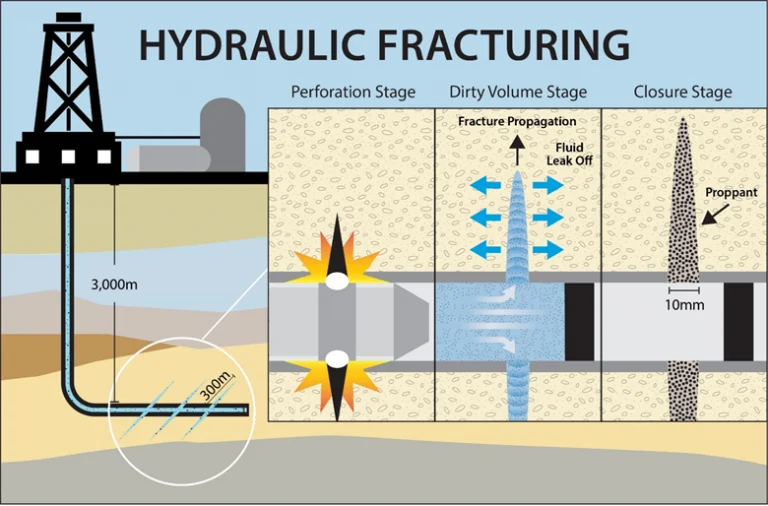
Here is what actually happens. You drill a well. You case it with steel and cement. Then you pump fluid at high pressure. Really high pressure. Enough to crack solid rock.
The fluid contains three things. Water makes up 90% or more. Proppants like sand hold the cracks open. Chemicals do various jobs like reducing friction or preventing pipe corrosion.
Those cracks are tiny. Less than 1 millimeter wide originally. The proppants keep them from closing when you release the pressure.
The History of Hydraulic Fracturing: From Explosives to Shale Gas
The history of hydraulic fracturing goes back further than most people realize.
1860s: Oil well operators used dynamite and nitroglycerin to break rock. A Civil War colonel named Edward Roberts got a patent for an "exploding torpedo" in 1865.
1930s: Acid stimulation replaced explosives. Acid etched fractures that would not close completely.
1947: The first true hydraulic fracturing experiment in Kansas.
1949: First commercial treatments in Oklahoma and Texas.
1952: The Soviet Union carried out its first proppant fracturing.
1968: Massive hydraulic fracturing began in Oklahoma. This meant injecting over 150 tons of proppant per job.
1970s: The technique spread to Germany, the Netherlands, and the North Sea.
1997-1998: The real game changer. Nick Steinsberger at Mitchell Energy applied slickwater fracturing to the Barnett Shale in Texas. More water. Higher pressure. The S.H. Griffin No. 3 well outperformed every previous well.
That is when everything changed.
When Did Fracking Become Popular? The Tipping Point
When did fracking became popular on a massive scale? The answer is 1998 to 2010.
By 2010, hydraulic fracturing was used in approximately 60% of extraction wells in the United States. The impact was staggering.
You Must Also Like: Types of Renewable Energy Resources and Their Uses
Gas production increased by 35% since 2005. The US stopped needing natural gas imports.
Oil production increased by 45% since 2010. The US became the second-largest oil producer in the world again.
The industry claims it created 2.7 million jobs and added $430 billion to GDP.
But here is the catch. All that production came with a price. Earthquakes. Water contamination fears. Public protests. And in some countries, outright bans.
Types of Hydraulic Fracturing: The Full List
Engineers developed many types of hydraulic fracturing for different rock formations. Here is what each one does.
Multi-Stage Fracturing
Used in horizontal wells. You isolate sections of the wellbore and fracture them one at a time. Standard for shale gas today.
Water Fracturing (Slickwater)
Low-viscosity fluid with friction reducers. Creates complex fracture networks. The technique that made the Barnett Shale work.
Simultaneous Fracturing
You frac two or more wells at the same time. Creates larger stimulated zones. Used for large-scale shale development.
Hydra-Jet Fracturing
Uses high-pressure jets to cut perforations. No packers required. Good for precise placement.
Refracturing
You come back to an old well and frac it again. New techniques access previously unstimulated rock.
CO2 and N2 Fracturing
Waterless alternatives. Use carbon dioxide or nitrogen as the fracturing fluid. Reduces water usage but costs more.
EGS Technology: The Geothermal Cousin
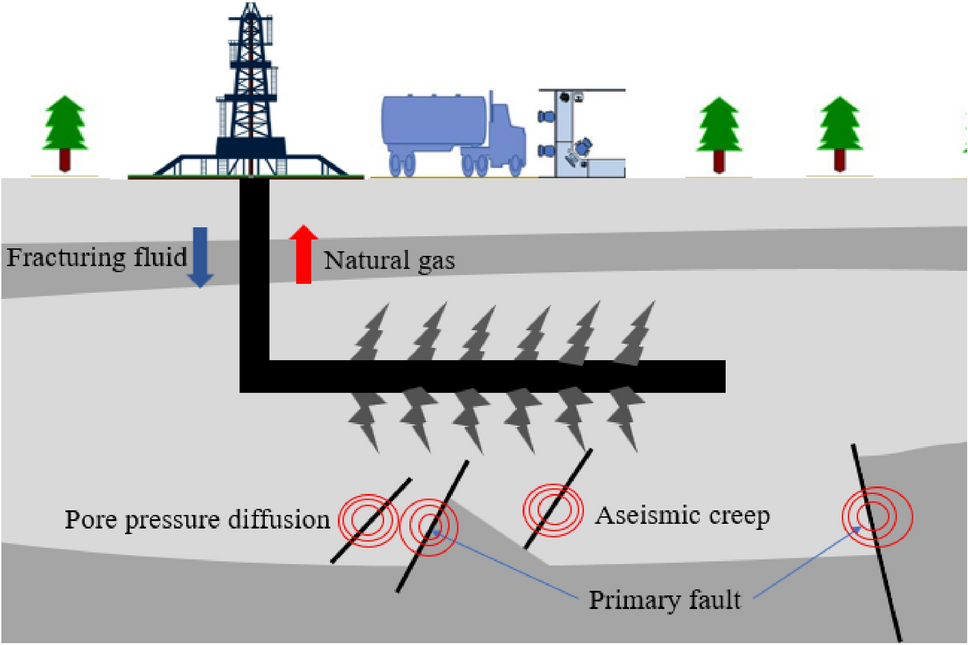
Enhanced Geothermal Systems (EGS) do the same thing as hydraulic fracturing but for a different goal.
Oil and gas fracking releases hydrocarbons. EGS creates heat exchange networks in hot dry rock 3-10 kilometers deep.
The rock temperature exceeds 150°C. Sometimes 200°C or more. You pump fluid down one well. It travels through fractured rock. It heats up. You extract it from another well. Then you generate electricity.
Same mechanics. Different purpose.
But EGS has a major problem. The same one that shut down high-profile projects around the world.
The Seismic Risk Problem: Basel, Pohang, and Soultz
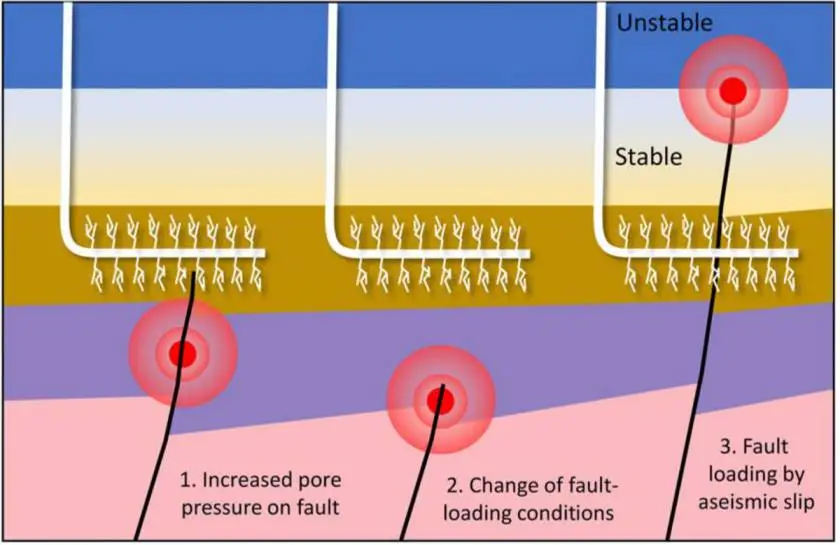
Induced seismicity is the single biggest obstacle for EGS development . Let me give you two real examples.
Pohang, South Korea (2017): Another EGS project triggered a magnitude 5.5 earthquake. That is strong enough to cause real damage. The government investigation concluded the project directly caused the quake.
These are not theoretical risks. They happened.
But here is what researchers discovered recently. The earthquakes do not happen everywhere equally.
The European EGS reference project in Soultz-sous-Forêts revealed something important. Large seismic events only occurred in unaltered granite. The hydrothermally altered zones only produced small events.
Why? Altered rock contains clay. Clay deforms without breaking suddenly. It slips slowly. Aseismic deformation instead of seismic.
This is huge. It means we might be able to map safe zones for injection.
Waterless Fracturing: The New Hope
Conventional hydraulic fracturing uses massive amounts of water. A single shale well can use millions of gallons.
EGS faces the same problem plus another one. Water reacts with hot rock. Dissolves minerals. Then those minerals precipitate and clog your fractures.
Three waterless alternatives are showing promise.
Supercritical CO2 Fracturing: CO2 heated above 31°C and pressurized above 7.38 MPa becomes supercritical. It has extremely low viscosity. It penetrates fine fractures easily. It also stores CO2 underground permanently.
Foam Fracturing: A mix of gas and a small amount of water. Usually 60-90% gas by volume. The foam distributes pressure evenly. It carries proppants well. Great for water-sensitive formations.
Liquid Nitrogen Fracturing: Extreme cold shocks the rock. Thermal stress creates microfractures without high pressure. Almost no seismic risk. Minimal water usage.
These technologies are not theoretical. They are being tested in laboratories and field demonstrations right now.
The Engineering Trilemma: What No One Wants to Admit?
Researchers recently framed the core challenge as an Engineering Trilemma.
You cannot optimize all three things at once.
Goal 1: Effective connectivity. You need fractures that connect your injection well to your production well. No shortcuts. No dead ends.
Goal 2: Sustainable heat extraction. The fractures must stay open and conductive for years. Not days or months.
Goal 3: Manage induced seismicity. No damaging earthquakes. No project shutdowns.
Pick two. You cannot have all three with current technology.
Hydraulic stimulation creates great connectivity. But it has the highest seismic risk.
Chemical stimulation offers precise control. But its radius of influence is limited.
Thermal stimulation has low risk. But it only works in specific geological settings.
This is the honest reality. No marketing. No hype.
Practical Comparison Table: EGS vs Hydraulic Fracturing
| Factor | Hydraulic Fracturing (Oil/Gas) | EGS (Geothermal) |
|---|---|---|
| Purpose | Extract hydrocarbons | Extract heat |
| Depth | 1,500-4,000 meters | 3,000-10,000 meters |
| Rock temperature | 50-120°C | 150-250°C+ |
| Water usage | Millions of gallons per well | Similar or less with new tech |
| Seismic risk | Moderate to high | High (project-shutting level) |
| Economic viability | Proven | Still in demonstration phase |
| Waterless options | CO2, N2, foam fracturing | SC-CO2, LN2, foam |
Who Each Method Is For (And Not For)?
Conventional hydraulic fracturing is for you if: You operate in the Permian Basin or Bakken formation. You have access to water. You can manage regulatory risk.
Conventional hydraulic fracturing is NOT for you if: You work in a drought-prone area. Your local government bans fracking. You cannot handle earthquake lawsuits.
EGS is for you if: You have hot basement rock. You have funding for long-term demonstration. You partner with research institutions like Utah FORGE.
EGS is NOT for you if: You need immediate returns. You operate near a major city (learn from Basel). You lack advanced seismic monitoring.
Safety Considerations: What They Do Not Tell You?
Here is what the industry brochures leave out.
Induced seismicity is real. The Pohang earthquake was magnitude 5.5. That is not "microseismic." That is damage to buildings.
Water contamination risks exist. Poorly cemented wells leak. Fractures can connect to shallow aquifers. Both have happened.
Chemical additives are not benign. Some are toxic. Some are carcinogenic. The industry discloses some but not all.
Water consumption is extreme. A single well in arid Texas uses what 100 families use in a year. This is not sustainable everywhere.
I am not anti-fracking. Natural gas replaced coal. That saved lives. But I am anti-bullshit. These risks need honest discussion.
Current Trends (2025-2026)
Utah FORGE is the most advanced EGS field laboratory. They have achieved hydraulic connectivity at 2-3 km depth. They use distributed acoustic sensing (DAS) and distributed temperature sensing (DTS) for fracture monitoring. Resolution is 1 meter. Sampling rate is 10,000 Hz.
Waterless fracturing research is accelerating. A March 2026 review confirmed that SC-CO2, foam, and LN2 fracturing all reduce seismic risk compared to water-based methods.
Machine learning is entering the field. AI models now predict fracture propagation. The Utah FORGE team trained a Small Language Model on their dataset. More than 133 terabytes of data. 300+ datasets.
Final Honest Take
EGS technology vs hydraulic fracturing is not a battle. It is a spectrum. Both methods break rock with pressurized fluid. Both risk earthquakes. Both need better technology.
The difference is purpose. One gives you natural gas today. The other gives you clean heat forever. If you want energy independence right now, hydraulic fracturing works. The United States proved that. Gas is cheap. Imports are down. The seismic risk is real. The costs are high.
The waterless fracturing technologies are the most exciting development. SC-CO2 does two jobs at once. It fractures the rock. It stores greenhouse gas. That is smart engineering.
Watch Utah FORGE over the next three years. If they solve the seismic problem, EGS becomes a global energy solution. If they do not, geothermal stays a niche player.