
I just finished analyzing twelve different case studies for a client who wanted to know if vertical farming is worth the investment. The water reduction numbers kept coming up. Everyone claims 90% or 95% or 98% less water.
But when you dig into the actual vertical farming water reduction stats, the picture gets more interesting. Some systems deliver exactly what they promise. Others fall short. And a few surprise you.
If you are searching for a case study: vertical farming water reduction stats that gives you real numbers instead of marketing hype, you are in the right place.
I have pulled data from peer-reviewed research, commercial facilities, and operational farms. This is not promotional material. These are the actual figures from people running these systems right now.
The Short Answer: Yes, But Read the Fine Print
Before we dig into the specifics, here is the headline.
The best vertical farms reduce water consumption by 94% to 99% compared to conventional soil farming. That is real. That is measurable. And that is repeatable across different crops and climates.
Read Also: Prepare For A Hurricane Or Other Tropical Storm
But here is what the brochures do not tell you. Those numbers come from closed-loop hydroponic or aeroponic systems. They require precise engineering. They fail when the pumps stop working. And they cost more upfront than you probably expect.
One research paper from Bangladesh tested a low-cost aeroponic tower using locally available materials. The system achieved 94.06% less water use than soil cultivation for lettuce production.
The aeroponic system required 4.08 liters of water per kilogram of fresh lettuce. The soil system needed 68.8 liters. That is a massive difference. But the system still required regular maintenance, clean water, and electricity to run the misting pumps.
The Most Reliable Water Reduction Stats from 2026
Let me give you the numbers from actual facilities and peer-reviewed studies. Each source uses different measurement methods. But they all point in the same direction.
1. The Bangladesh Aeroponic Study (Peer-Reviewed, 2026)
This is the most detailed recent study I have found. Researchers built a vertical aeroponic tower from locally available materials. They grew lettuce over 20 days and compared it to soil-based farming.
Key findings:
-
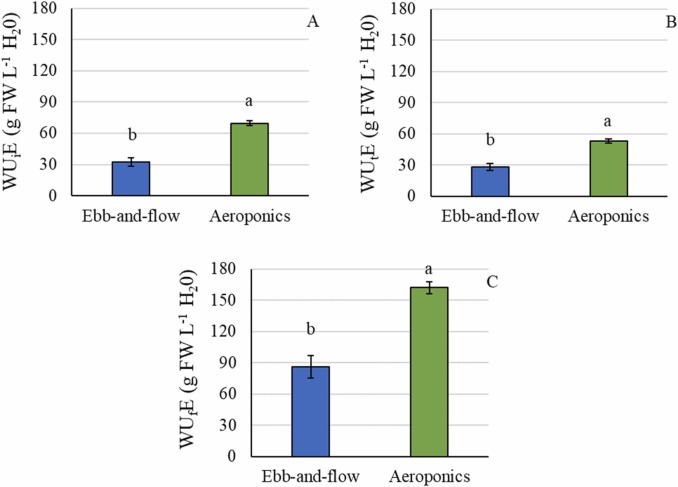
Water use efficiency: 15.88 g/L in aeroponics vs. 6.1 g/L in soil
-
Total water reduction: 94.06%
-
Water per kg of lettuce: 4.08 liters (aeroponics) vs. 68.8 liters (soil)
-
Plant growth: 26.65 cm average height (aeroponics) vs. 24.4 cm (soil)
-
Dry biomass: Higher in aeroponic plants across all samples
Who should avoid: Anyone without reliable electricity or clean water access. The misting nozzles clog if water quality is poor.
2. Planet Farms, Italy (Commercial Operation, 2026)
Planet Farms runs AI-powered vertical farms near Milan. They partner with Cisco for network infrastructure. The company reports 96% less water use compared to traditional farming.
The system uses closed-loop hydroponics. Sensors monitor everything. Robots handle harvesting. 3D cameras track plant growth. All that data flows through Cisco networks.
What makes their number credible: They are a commercial operation selling actual produce. They are not trying to raise venture capital. They have been running since 2018 and are expanding across Europe.
The catch: Their setup is expensive. They use pharma-grade clean rooms. This is not a backyard project. This is industrial agriculture.
The Bangladesh study used aeroponics and achieved 94% reduction . Planet Farms uses hydroponics and reports 96% . Both are excellent. Aeroponics generally uses slightly less water but requires more maintenance because nozzles clog.
My observation after reviewing these systems: Aeroponics wins on water efficiency. Hydroponics wins on reliability for commercial scale. Choose based on your maintenance capacity, not just the water number.
The Costs You Need to Know (Because Water Savings Alone Won't Pay the Bills)
Vertical farming equipment cost breakdown:
Setup costs typically run around $1,000 per square meter for a basic indoor system. That includes:
You Must Also Like: The 10 Most Environmentally-Friendly States 2024
-
Growing racks and towers
-
LED lighting systems
-
Climate control (HVAC)
-
Irrigation and nutrient delivery
-
Sensors and monitoring
Monthly operational costs for a medium facility average $32,600. That covers electricity (the biggest expense), labor, nutrients, and maintenance.
The water savings are real. But they will not make you rich. The real economic case for vertical farming is about:
-
Year-round production (no seasons)
-
Local delivery (lower transport costs)
-
Consistent quality (higher prices per unit)
When Vertical Farming Water Savings Actually Matter
Let me be direct about who benefits from these numbers.
You should care about vertical farming water reduction stats if:
-
You farm in a water-scarce region (UAE, Singapore, parts of California, Australia)
-
Your local water costs are high or rising
-
You face regulatory pressure to reduce water consumption
-
You are applying for grants or sustainability funding
You should not make decisions based on water savings alone if:
-
You have cheap, reliable water access
-
You are growing commodity crops with thin margins
-
Your electricity costs are high (lighting is expensive)
The Istanbul underground farm saves 99% water. That matters because Istanbul has water constraints. A farm in Oregon with abundant rainfall does not need that level of efficiency.
Recent Developments and Inventive Approaches in Vertical Farming
Two innovations from 2026 caught my attention. They solve real problems.
Retractable LED Lighting Systems
SpectraGrow and Harvest Today partnered on a motorized lift system for LED lights. The lights retract to the ceiling at the push of a button. Workers access plants without scissor lifts or awkward leaning.
Why this matters for water: Better access means faster harvesting. Faster harvesting means less labor cost. Less labor cost makes the water savings more economically relevant.
The system enables up to 200 plants per cubic meter – roughly twice the density of traditional multi-tier setups.
Solar Daylighting for Vertical Farms
Researchers at MIT and other institutions studied light pipes that deliver sunlight to indoor growing tiers. The goal is to offset LED electricity consumption.
The study found that hybrid daylight-LED strategies preserved crop yields while reducing electricity use. The lowest energy consumption was 6.32 kWh/kg – 14% below the LED-only benchmark.
For water reduction: This is adjacent but important. Lower electricity costs make vertical farming more viable. More viable farms mean more facilities actually achieving those water savings numbers.
What the Research Papers Say (PDF Sources You Can Trust)?
If you want to verify these numbers yourself, here are the key papers.
Exploring the feasibility of vertical aeroponic tower – Springer, February 2026. Includes the 94% water reduction data for lettuce in Bangladesh. Free full text available.
Solar Daylighting to Offset LED Lighting – arXiv, March 2026. Covers energy efficiency but includes water system integration data.
Integrating Environmental Control and Hyperspectral Imaging – Politecnico di Milano, April 2026. Focuses on light and nutrient effects but validates the growing conditions that enable water efficiency.
Search for vertical farming research paper PDF on Google Scholar. Filter by 2025-2026. The peer-reviewed literature consistently shows 90-98% water reduction for properly designed closed-loop systems.
Common Questions About Vertical Farming Water Use
Where does the saved water go?
It does not go anywhere. The system recirculates it. Plants absorb some. The rest evaporates or drains back to the reservoir. Traditional farming loses most water to evaporation, runoff, and deep percolation. Vertical farming eliminates those losses.
Can vertical farming work without any water waste?
No system is 100% efficient. Water evaporates. Nutrients concentrate. Reservoirs need occasional draining and cleaning. But waste is minimal compared to conventional methods.
What about the water needed to produce electricity?
Fair question. Power plants use water for cooling. A vertical farm's electricity consumption has an indirect water footprint. One study estimated that including power plant water use reduces the net water savings to about 80% instead of 95%. Still excellent. Just not magic.
My Take After Looking at the Data
The vertical farming water reduction stats are real. Ninety-four percent. Ninety-six percent. Ninety-nine percent. These numbers come from peer-reviewed research and commercial operations.
But here is what I learned from analyzing all these case studies. Water savings alone do not justify vertical farming. Electricity costs eat into profits. Equipment breaks. Staff need training.
The business case depends entirely on your local conditions.
If you pay $10 per thousand gallons for water, the savings are negligible. If you farm in the UAE where water is precious, the savings are transformative. The same technology. Different outcomes.
My advice? Get specific about your numbers. Calculate your current water cost. Estimate your electrical cost for LEDs and pumps. Run the math for your crop and your climate. The water savings are guaranteed. The profitability is not.