
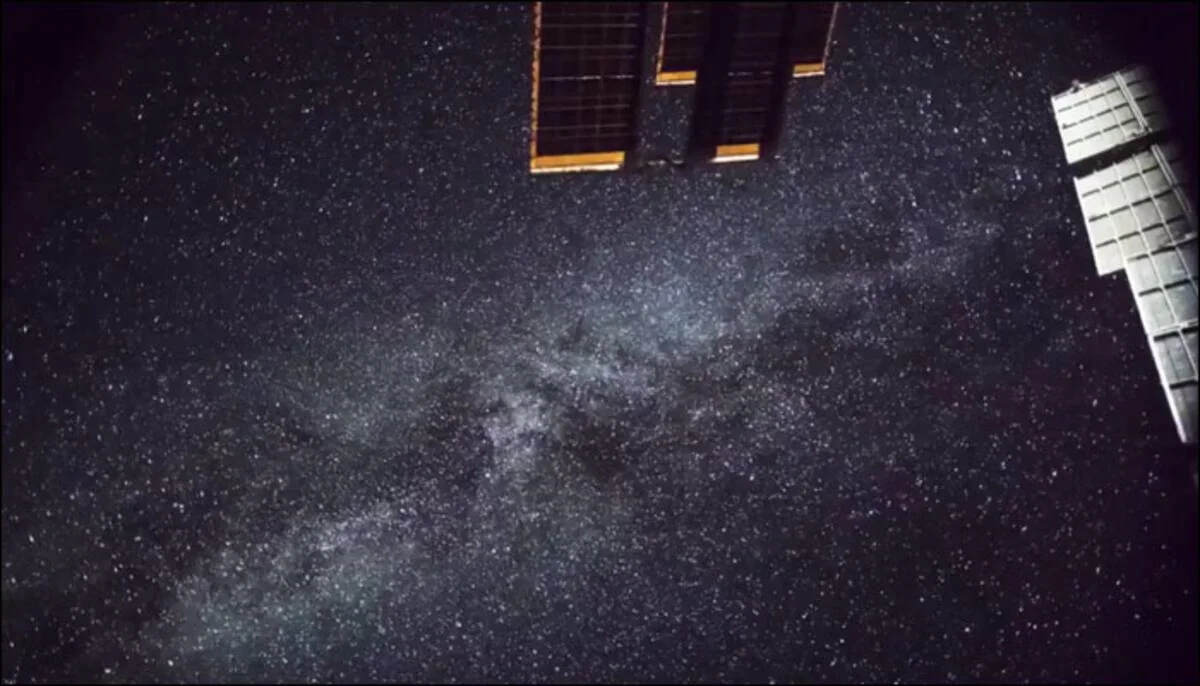
You have seen the image everywhere. A glowing band of stars stretching across darkness. Earth curved at the bottom. The Picture of Milky Way galaxy from space that NASA released has crossed 90,000 likes online.
People call it magical. Unreal. Spectacular. But here is what most headlines are not telling you. This photo is not a complete picture of our galaxy. It cannot be. We live inside the Milky Way.
You cannot photograph your own house from the living room couch. Let me break down what NASA astronaut Chris Williams actually captured. Where he took it from. Why it matters. And the honest truth about those Milky Way pictures from earth that you see everywhere.
First, What Exactly Did NASA Release?
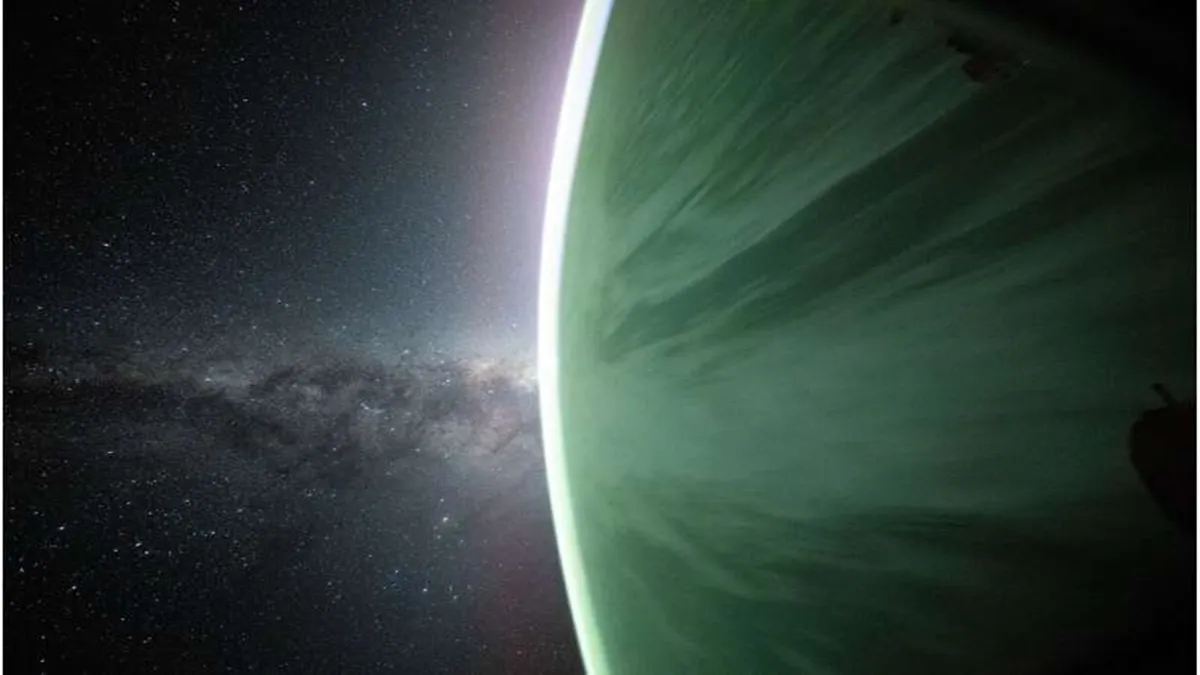
On May 19, 2026, NASA shared a photograph taken by astronaut Chris Williams. He was onboard a SpaceX Dragon spacecraft. The Dragon was docked to the International Space Station (ISS). Orbiting hundreds of kilometers above Earth.
Read Also: 40 Years in the Making: ViaSat Prepares the ViaSat-3 F3 for Milestone Launch
The image shows the bright central band of the Milky Way stretching vertically through the center. Stars surround it. Earth takes up the bottom half of the frame. The oval window of the spacecraft hazily frames the corners.
NASA's description reads: "The bright, central band of the Milky Way stretches vertically across the centre of this image, with stars surrounding it. The dark Earth takes up most of the image's bottom half".
The photo looks different from anything you can capture on the ground. No city lights. No pollution. No atmospheric haze . Just the galaxy, raw and unobstructed.
Where Was This Photo Actually Taken?
Not from the Moon. Not from deep space. From a SpaceX Dragon spacecraft docked to the ISS. The ISS orbits about 400 kilometers above Earth. That is roughly the distance from Mumbai to Ahmedabad.
Here is why that location matters. From the ground, our atmosphere scatters light. Dust particles blur the view. City lights create glare. But from orbit, all those problems disappear.
Astronauts aboard the ISS regularly photograph the galaxy from above. Without interference, the Milky Way appears brighter and wider. This particular shot also captures Earth's atmospheric glow near the horizon.
Williams was not using a special Hubble-level telescope. He pointed a camera out the window of a docked spacecraft. That is it. The clarity comes from the vantage point, not expensive equipment.
Wait. Is This a "Real" Photo of the Whole Milky Way?
Here is the honest answer. No.
And that is not a criticism of NASA. It is basic physics.
A former NASA analyst explained this clearly. Every full image you see of the Milky Way is an illustration. Not a photograph. We have never sent a spacecraft far enough outside our galaxy to capture a complete picture.
You Must Also Like: NASA Readies Artemis II for Upcoming Fueling Test
And travel incredibly far. Far beyond our solar system. Far beyond anything humans have ever built.
So what did Chris Williams photograph? A stunning view of the Milky Way's disk from the inside. The glowing band you see is the edge-on view of our galaxy. We are inside that disk. Looking toward the center.
Milky Way pictures from earth show a faint band of light stretching across the night sky. This ISS photo shows the same band. Just clearer. Brighter. No atmospheric distortion.
How This Photo Compares to Earth-Based Shots?
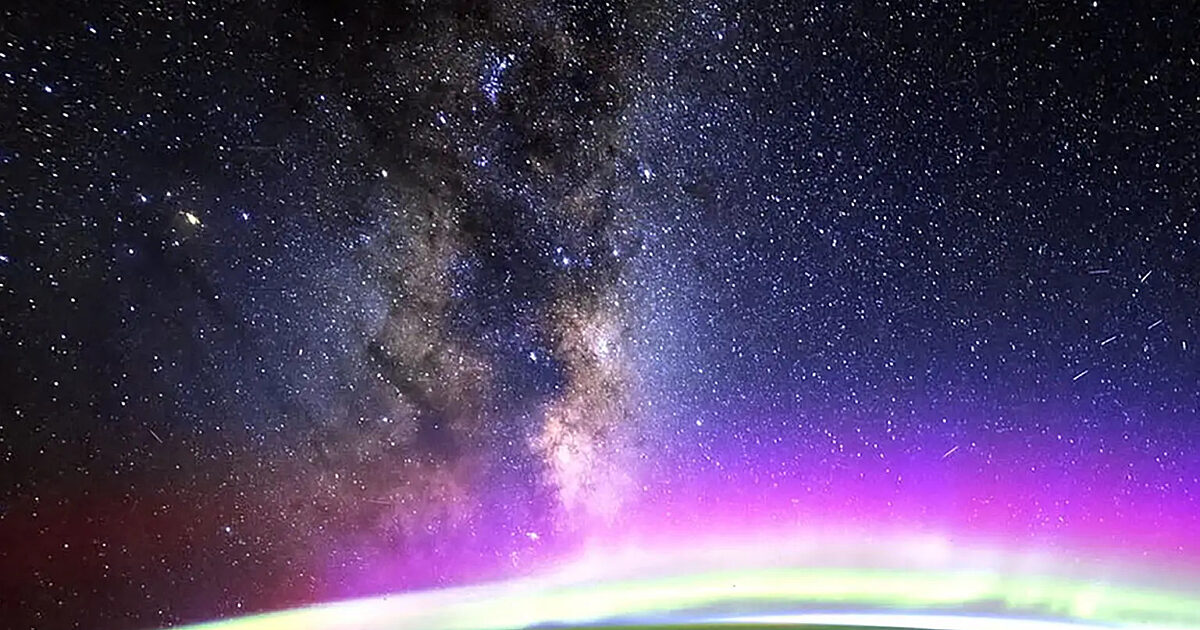
I have spent nights in dark sky locations. Ladakh. The Australian outback. The Namibian desert. Places with zero light pollution. On a clear night, you see the Milky Way as a hazy river of stars. Beautiful. But faint.
The ISS photo is different.
| Feature | From Earth (Dark Sky) | From ISS |
|---|---|---|
| Atmospheric interference | Yes (dust, moisture, air) | None |
| Light pollution | Zero to minimal | None |
| Clarity | Good | Exceptional |
| Color visibility | Mostly white/gray band | Clear colors |
| What you see | Faint, milky band | Bright, structured band |
The difference is not the galaxy. The galaxy is the same. The difference is what sits between you and the galaxy. On Earth, you look through 100 kilometers of atmosphere. From the ISS, nothing blocks the view.
The Artemis II Connection: Another Stunning Shot
This shot came from deep space. Not low Earth orbit. The clarity is even more remarkable because there is no atmosphere at all. No Earth glow. No scattered light. Just the galaxy.
So which photo is better? The ISS shot includes Earth in the frame. That gives scale. You see our planet and our galaxy in one image. The Artemis II shot is pure deep space. Both are stunning. Both are real. Neither shows the whole galaxy.
What You Are Actually Looking At: The Science
Let me explain what the bright band represents.
The Smooth Way is a banished winding system. It has four winding arms. Soil sits in a littler arm called the Orion Goad. Our sun oriented framework circles the galactic center at 515,000 miles per hour.
The shinning band you see in Williams' photo is the galactic plane. That is where most of the Smooth Way's hundreds of billions of stars are concentrated. The center of the universe (covered up behind tidy clouds in this specific shot) contains a supermassive dark gap called Sagittarius A.
The world contains hundreds of billions of stars. Sufficient gas and clean to make billions more. Also at slightest ten times as much dull matter as everything we can see.
When you look at that photo, you are looking edge-on into a disk that spans 100,000 light-years. Every dot of light is a star. Many have planets. Some might have life. It is humbling.
What About Those "Full Milky Way" Photos Online?
You have seen them. Perfect spiral galaxy images labeled "Milky Way." They are fake. Not in a malicious way. But they are illustrations.
Scientists know what our galaxy looks like because we can see other spiral galaxies. We can map stars within our own galaxy. We can measure distances and movements.
But here is the honest truth. We will likely never see the Milky Way from far enough away to take a true photograph. Not in our lifetimes. Not in many, many generations.
That does not make the ISS photo less valuable. It makes it more real. This is what our galaxy actually looks like from our position inside it. That is honest science. Not illustration.
Honest Pros and Cons of Viral Space Photos
Since you asked for clear buying guidance (in this case, what to trust when you see space photos online), here is my breakdown.
Pros of trusting NASA-released ISS photos:
-
Real data. Not an artist's rendering. These are actual photographs.
-
No hidden manipulation. NASA adjusts contrast and color for clarity but does not fabricate stars.
-
Scientific value. Researchers use these images to study atmospheric phenomena and star visibility.
Cons of viral space photos:
-
Missing context. Headlines rarely explain you are seeing the galaxy from inside, not outside.
-
Color enhancement. Some images boost colors to highlight features. The raw photo looks different.
-
Fake versions exist. Many social media accounts share illustrations labeled as "real photos."
How to spot fake Milky Way photos:
-
If the image shows a perfect spiral galaxy from above, it is an illustration or another galaxy.
-
If the image has no spacecraft window or Earth in frame, ask where it was taken from.
-
Check the source. NASA .gov or official space agency websites are trustworthy.
What NASA Is Doing Next: The Roman Telescope
This viral photo is not the conclusion. It is a preview.
NASA is planning the Nancy Beauty Roman Space Telescope. Anticipated dispatch no afterward than May 2027. This telescope will consider the gas and tidy between stars in distant more noteworthy detail than anything before.
Unlike the Hubble or James Webb telescopes, Roman has a wide field of see. It can capture expansive areas of the sky in a single picture. That implies way better maps of the Smooth Way's structure.
But even Roman will not photograph the whole galaxy from outside. That remains impossible with current technology.
How to See the Milky Way Yourself?
You do not need to go to space. You just need dark skies.
Best time to view: June through August in the Northern Hemisphere. The galactic center is visible during these months.
What you need: Darkness. No moon. No city lights. A clear sky. Your eyes (no telescope required).
Where in India to go: Ladakh (Hanle Dark Sky Reserve). Spiti Valley. Coorg during new moon. The Western Ghats away from cities.
What you will see: A faint, milky band stretching across the sky. Not as bright as the ISS photo. But real. And standing under it changes you.
What you will not see: The bright, colorful band from NASA photos. Your eyes cannot gather enough light. Cameras with long exposures capture those colors. Manage your expectations.
Equipment if you want to photograph it:
| Equipment | Best for | Price range |
|---|---|---|
| Smartphone (tripod + night mode) | Beginners | Rs 0 to 1,000 (tripod) |
| DSLR/Mirrorless + fast lens | Enthusiasts | Rs 50,000 to 1,50,000 |
| Star tracker | Advanced | Rs 30,000 to 80,000 |
Honest advice: Start with your phone on a tripod. Use a 30-second exposure. You will be surprised what you capture. Do not buy expensive gear until you have visited a dark sky location at least twice.
Common Questions Answered
Q: Is the viral Milky Way photo real?
A: Yes. NASA astronaut Chris Williams took it from a SpaceX Dragon docked to the ISS on May 19, 2026 . It shows the Milky Way from the inside.
Q: Can we take a photo of the whole Milky Way?
A: No. We have never sent a spacecraft far enough outside our galaxy. Every full image you see is an illustration.
Q: Why does the Milky Way look different from Earth?
A: Earth's atmosphere scatters light. Dust and pollution blur the view. From space, nothing blocks the galaxy.
Q: What is the bright band in the photo?
A: The galactic plane. That is where most of the Milky Way's stars are concentrated. We are looking edge-on into our own galaxy's disk.
Q: When will NASA launch the Roman telescope?
A: No later than May 2027. It will study gas and dust between stars in the Milky Way.
Final Thoughts
The Picture of Milky Way galaxy from space that NASA released is not the most scientifically valuable image ever taken. The Hubble Deep Field holds that title. The James Webb Space Telescope's first images are technically superior.
But this photo is human.
It was taken by an astronaut. From a spacecraft. Looking out a window. The same way you might look out an airplane window. Except instead of clouds, he saw a hundred billion stars.
The internet response proves something. People still want to look up. They want to feel small in a good way. They want proof that something bigger exists. That real photo of Milky Way galaxy delivers exactly that.
No illustration needed.