
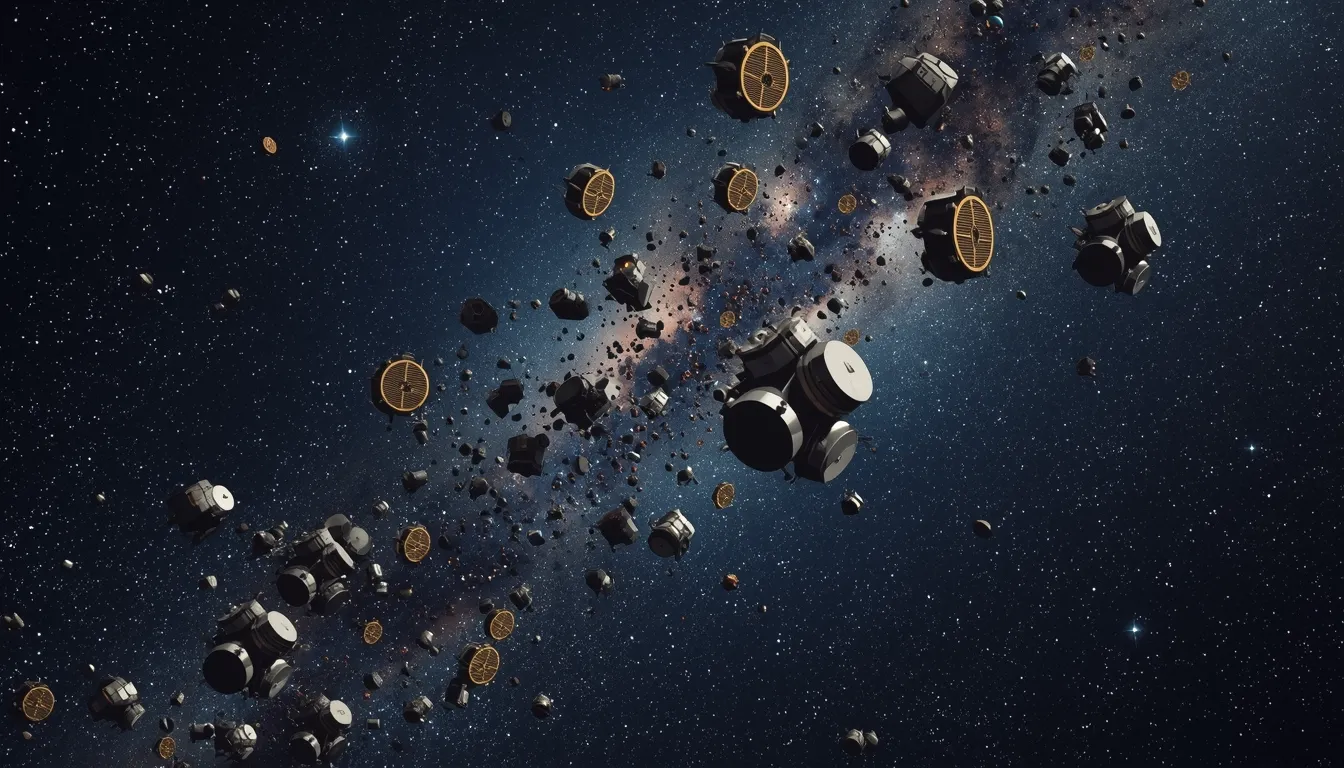
Tracking objects falling back to Earth from space has always been a serious challenge. Radar systems track satellites and debris well in stable orbit. But things change during reentry.
When an object enters the upper atmosphere, it faces strong drag and heat. This can cause it to break apart, making its path hard to predict. Scientists can be wrong by thousands of miles. This happens when they predict where debris will land.
Now, a surprising solution is changing the game. Instead of looking up at the sky, researchers are listening to the ground. Scientists are using global networks of seismometers, the same tools for measuring earthquakes.
This helps them track falling space debris with great precision. This approach is opening a new chapter in space safety and situational awareness.
How Earthquake Sensors Can “Hear” Space Junk
Most people picture a bright light streak. This happens when they think of something reentering Earth's atmosphere. In reality, these objects are anything but quiet.
Read Also: Chandra Observatory Captures the Champagne Cluster to Ring in the New Year
A spent rocket stage or dead satellite falls back to Earth at very high speeds. This usually happens between Mach 25 and Mach 30. That’s roughly ten times faster than the fastest jet ever flown. At those speeds, the object compresses the air in front of it with great force.
The result is a massive sonic boom.
This shock wave doesn’t move through the air. It sends energy down into the ground. This makes vibrations. These vibrations are strong enough for sensitive seismic instruments to pick up. In other words, the planet itself can hear falling space junk.
Turning Ground Vibrations into Flight Paths
The real breakthrough lies in how scientists interpret this seismic data. Here’s how the process works:
Detection
When a reentering object passes overhead, seismic stations in the area detect faint, clear vibrations. These signals are not like earthquakes, explosions, or industrial noise. We can easily identify them with the right algorithms.
Mapping
Researchers can see which seismometers triggered and when. They often measure this in microseconds. This lets them map the object's path through the atmosphere.
Precision
In a 2024 test of China's Shenzhou-15 spacecraft, seismic analysis showed surprising results. The reentry path was 25 miles away from what radar systems predicted. That margin can decide if a splashdown is safe or if debris lands near people.
This level of accuracy seemed impossible during the chaotic moments of re-entry.
Why This Matters for the United States?
For a US-based audience, this technology is not fascinating—it is practical and urgent. Companies are launching more objects into orbit than ever before.
Companies like SpaceX, Amazon, and OneWeb are deploying thousands of satellites. More launches mean more reentries, both planned and unplanned. As traffic in space increases, so does the risk on the ground.
1. Faster Recovery of Dangerous Materials
Some spacecraft have materials that can be harmful. If these materials survive reentry, they can reach the surface and cause danger. These include:
-
Toxic propellants, such as hydrazine.
-
Pressurized tanks that may explode on impact.
-
Radioactive components in older or specialized spacecraft.
Traditional recovery efforts may take weeks or months. This is because the predicted impact zone is very large.
You Must Also Like: Roman Space Telescope Surges Forward After Passing Critical Tests
Seismic tracking changes that.
Emergency and hazmat teams can narrow a crash site in minutes, not months. This speed helps them secure debris quickly and protect the public from exposure. In some scenarios, response times could drop from 100 days to under 100 seconds.
2. Understanding the “Big Breakup”
One of the least understood phases of reentry is the moment when a spacecraft starts to break apart. Radar tracking often becomes unreliable at this stage. Objects fragment, slow down, and scatter unpredictably.
Seismic data fills this gap.
The ground keeps “hearing” the object as it breaks apart. This lets researchers capture a timeline of how and when the breakup happens, all in less than a second.
“When a spacecraft starts to break apart, tracking can get messy. But the ground still picks up signals,” says Dr. Constantinos Charalambous, the lead researcher on the project.
This insight helps engineers design safer spacecraft and improves future re-entry predictions.
3. A Cost-Effective Global Safety Network
Building and keeping advanced radar stations cost billions. It also needs teamwork from different countries. Seismometers, yet, are already everywhere.
Thousands of seismic stations around the world track earthquakes, volcanoes, and underground tests. Scientists can update software and use new analysis methods. This way, they can turn current networks into a global space debris tracking system. Best of all, it costs much less.
This method is efficient, scalable, and easy to access. It works well, even in areas lacking advanced space infrastructure.
The Future of Space Situational Awareness
By 2026, researchers aim to create a real-time catalog of major re-entry events. Such a system would allow authorities to:
-
Issue rapid warnings to planes flying near debris paths.
-
Confirm whether a spacecraft truly disintegrated, as operators often claim.
-
Protect cities, power grids, and infrastructure by predicting impact zones with surgical precision.
This would represent a major leap forward in public safety and space accountability.
When the Ground Speaks, We Listen
The idea that earthquake sensors can keep us safe from falling satellites feels like science fiction. It sounds impossible. It feels futuristic. Yet, it is already happening.
The next time the ground subtly trembles, it might not be a fault line shifting beneath our feet. It might be the sound of a falling star. A global network tracks, maps, and makes it safe. It listens quietly from below.
In crowded orbits, space safety needs less skywatching. It relies more on what Earth is telling