
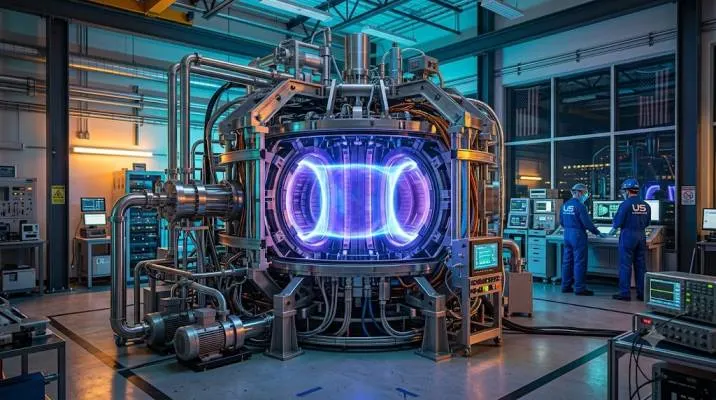
Nuclear fusion has always been the energy source of tomorrow. For decades, the joke was that it would be 30 years away, forever. But something shifted in 2026.
The U.S. Department of Energy released a finalized Fusion Science and Technology Roadmap in June 2026, laying out a concrete plan to bring commercial fusion power online by the mid-2030s . Over 800 experts from public and private sectors contributed to this strategy .
Private companies are breaking ground on facilities designed to achieve net energy gain by 2030. The "compact nuclear fusion net energy timeline" has moved from science fiction to an engineering project with deadlines.
What Exactly Is "Net Energy Gain"?
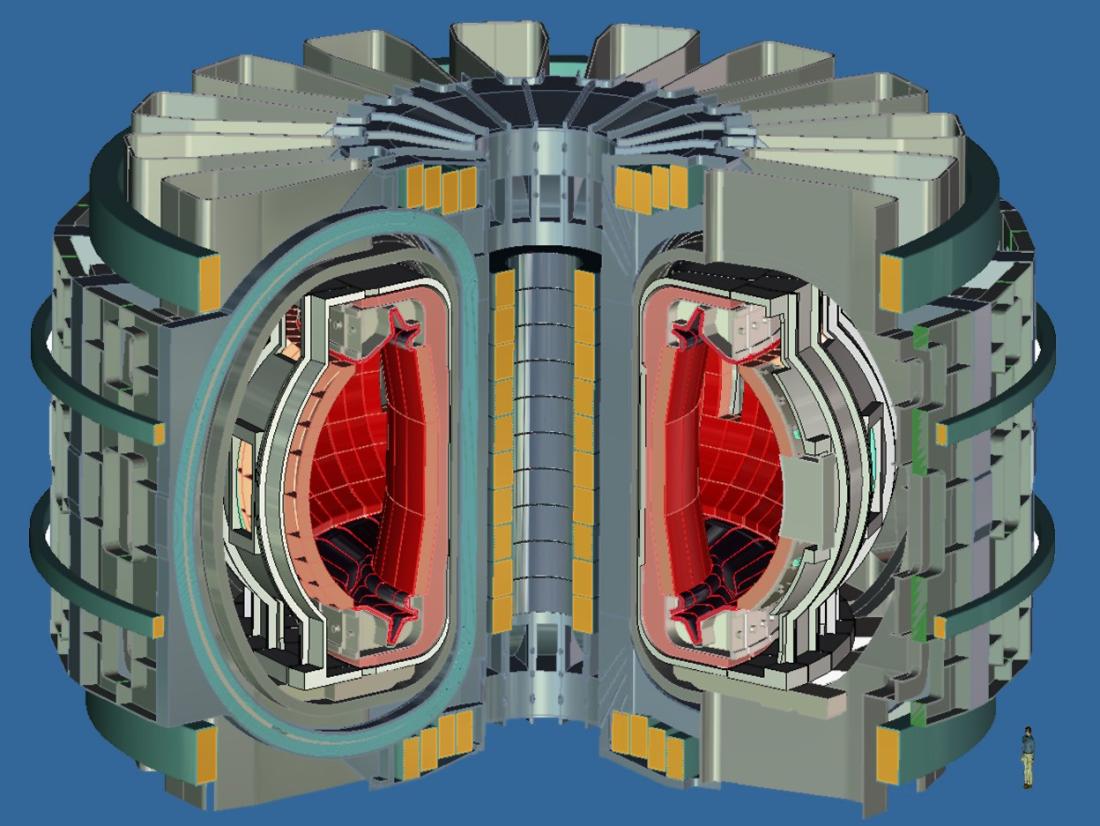
Before we talk about timelines, let's be clear about what "net energy gain" means. The most famous milestone was in 2022, when the National Ignition Facility (NIF) achieved scientific net energy gain . The fusion reaction produced more energy than the laser energy that ignited the fuel capsule. But that's not the whole story.
Read Also: EGS Technology Vs Hydraulic Fracturing: Comparing Subsurface Stimulation and Seismic Risks
The next milestone is "net facility gain." This means producing more fusion energy than the total energy initially stored in the machine, accounting for all the energy lost during power conversion and system operations .
No one has done this yet. It's the key that unlocks the path to commercial power . For true commercial viability, the energy gain factor (Q value) needs to exceed 20 for tokamak-based systems .
The U.S. Roadmap to Commercial Fusion
The DOE's roadmap is structured around three priorities. First, building critical infrastructure to test materials under extreme radiation conditions. Second, advancing research through high-performance computing and AI. Third, expanding the U.S. fusion ecosystem through public-private partnerships, supply-chain development, and workforce growth .
The private sector is leading the charge. Pacific Fusion broke ground in August 2026 on a $1 billion research campus in Albuquerque, New Mexico . They plan to build a Demonstration System designed to achieve net facility gain by 2030 .
The system will produce bursts of high-energy fusion output exceeding 100 megajoules, about ten times greater than NIF's output .
Pacific Fusion's technology uses a pulser array with 156 modules. They completed a scaled prototype in June 2026 and are targeting completion of a full-scale module by the end of 2026.
The timeline from 2027 to 2029 involves manufacturing and synchronizing the remaining modules. The integrated demonstration is set for 2030 . A commercial-scale reactor, designed to output roughly five times the energy of the 2030 demonstration system, is projected for grid deployment in the 2030s .
What Other Players Are Doing?
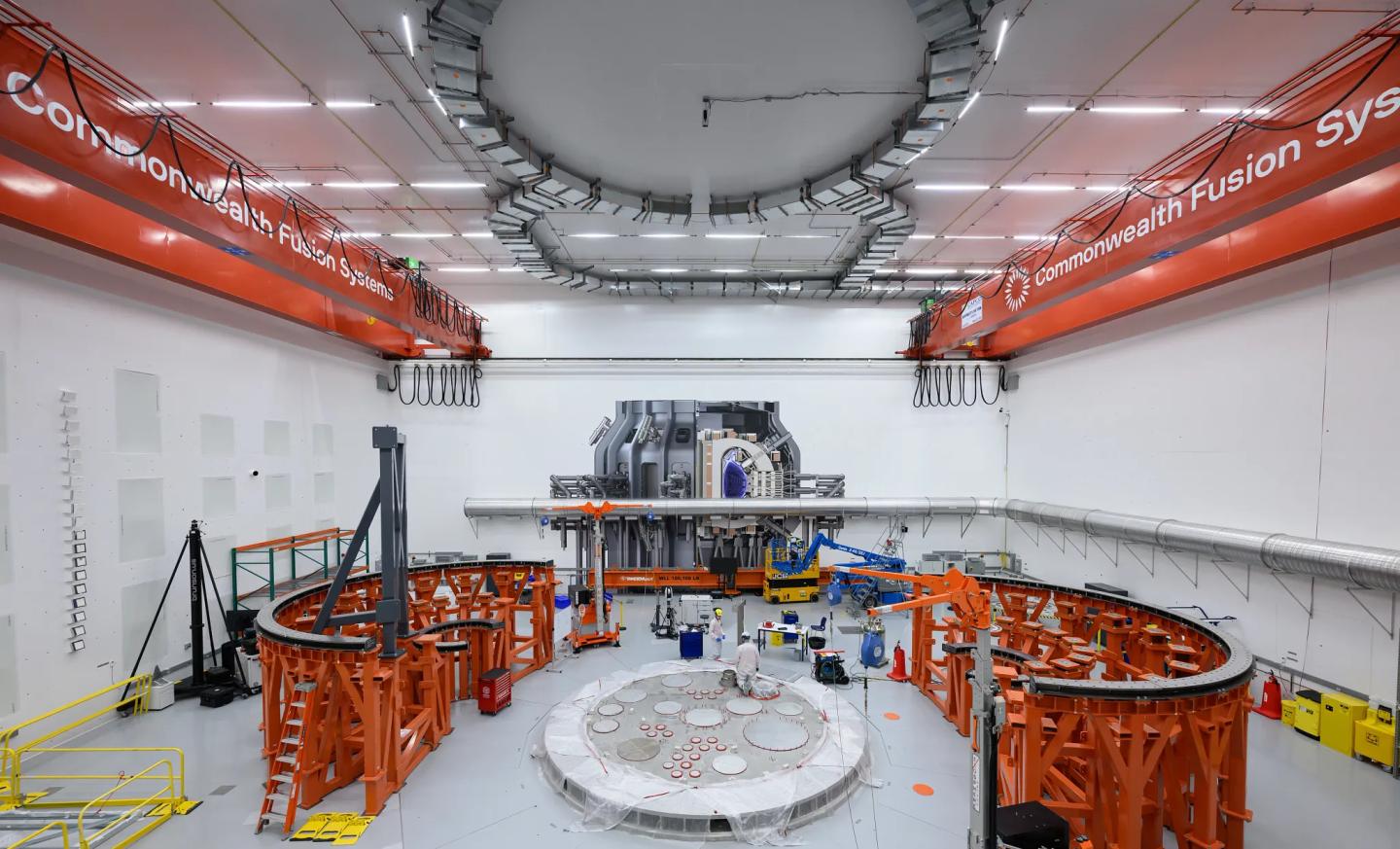
Pacific Fusion is not alone. CommonWealth Fusion Systems (CFS) is another major player. They have raised nearly $3 billion and are preparing to start their prototype device, SPARC, in 2027 .
You Must Also Like: Types of Renewable Energy Resources and Their Uses
SPARC is designed to achieve net energy output, meaning it produces more energy than it takes to heat and confine the plasma. However, SPARC may not exceed the total energy consumption of the entire facility . Their follow-up device, ARC, is designed to generate 400 megawatts of net electricity for the grid in the 2030s .
The competition is global. China's BEST compact fusion experiment in Hefei is targeting first fusion electricity generation by 2030 . The project aims to demonstrate net fusion power gain and "light humanity's first nuclear-fusion-powered lamp" .
China is advancing multiple fusion pathways simultaneously, including a field-reversed configuration device in Chengdu expected to begin operation by the end of 2026 .
Compact Fusion: The New Frontier
The shift toward "compact" fusion is a major trend. Traditional tokamaks are massive. The SMART reactor in Spain uses a spherical design with high-temperature superconducting magnets and a plasma configuration called negative triangularity .
This allows the same confinement with less external energy and in a smaller volume. The project leaders believe a pilot plant could be operational in about ten years .
The UK's STEP Fusion program has a more conservative timeline, targeting a commercial reactor by 2040 after construction begins early next decade . The program builds on experience from the Joint European Torus (JET), where researchers achieved a record 59 megajoules of sustained fusion energy .
Avalanche Energy, a compact fusion startup, raised $29 million in early 2026 to chase a net-energy breakthrough . They are scaling their FusionWERX test facility in Richland and plan a deuterium-tritium test program aimed at demonstrating the world's first net-energy compact fusion system .
Their technology is designed for applications like data centers, military bases, and even space propulsion . They achieved a major vacuum high-voltage breakthrough in 2025, operating a fusion machine at 300 kV, setting a record field strength .
What Are the Real Obstacles?
The optimism is real, but so are the challenges. Some researchers caution that predictions from companies like CFS need to be validated with actual reactor data . There are still major engineering problems to solve:
Materials – Future fusion power plants need to run for 30 to 50 years. No material currently exists that can withstand that long in the extreme environment of a fusion reactor .
Fuel – The reactor needs tritium, a rare isotope of hydrogen. Plans to breed tritium using neutrons from the reaction and lithium in the reactor wall are still unproven .
Efficiency – Laser fusion has a fundamental problem. The conversion of electricity to laser light is only about 1% efficient .
Plasma Stability – Plasma behavior under real operating conditions is uncertain. Models must be verified by reactors that actually run as designed .
When Will Nuclear Fusion Be Viable?
The answer depends on how you define "viable." The first demonstration of net facility gain is targeted for 2030 by Pacific Fusion . China is targeting first electricity generation from fusion around 2030 with the BEST project .
The U.S. DOE roadmap aims for commercial pilot plants by the mid-2030s . Full-scale commercial reactors connected to the grid are expected in the 2030s .
But experts warn that these timelines are ambitious. The fusion industry has a history of overpromising. However, something is different this time. Private investment has exceeded $10 billion .
More than 120 procurement projects are scheduled in China alone for 2026 . Fusion-related ETFs brought $70 billion of new capital into related sectors in 2025.
The global race to commercial fusion is real, and the finish line is in sight. The technology that was always 30 years away is now being built with concrete deadlines. The compact nuclear fusion net energy timeline points to the 2030s as the decade when humanity might finally light that first fusion-powered lamp.