
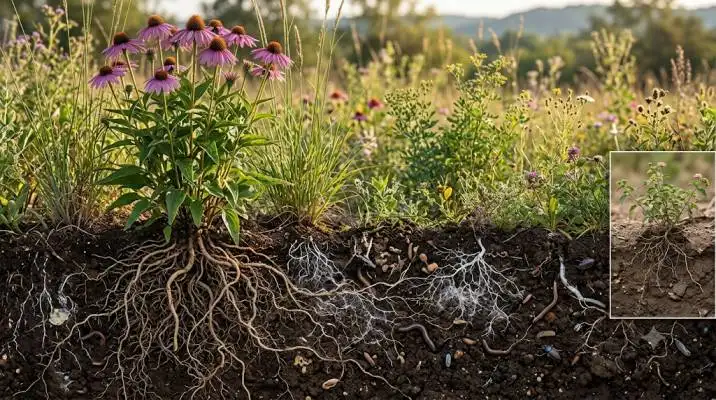
Native plants are better for local soil ecosystems because they evolved here. Their roots, their microbes, and their life cycles fit the soil they grew up in. A native plant does not need you to amend the soil, add fertilizer, or fix the pH.
It already knows how to live there. The Virginia Department of Conservation and Recreation puts it plainly: native plants "maintain or improve soil fertility, reduce erosion, and often require less fertilizer and pesticides".
Why Are Native Plants Better for Local Soil Ecosystems?
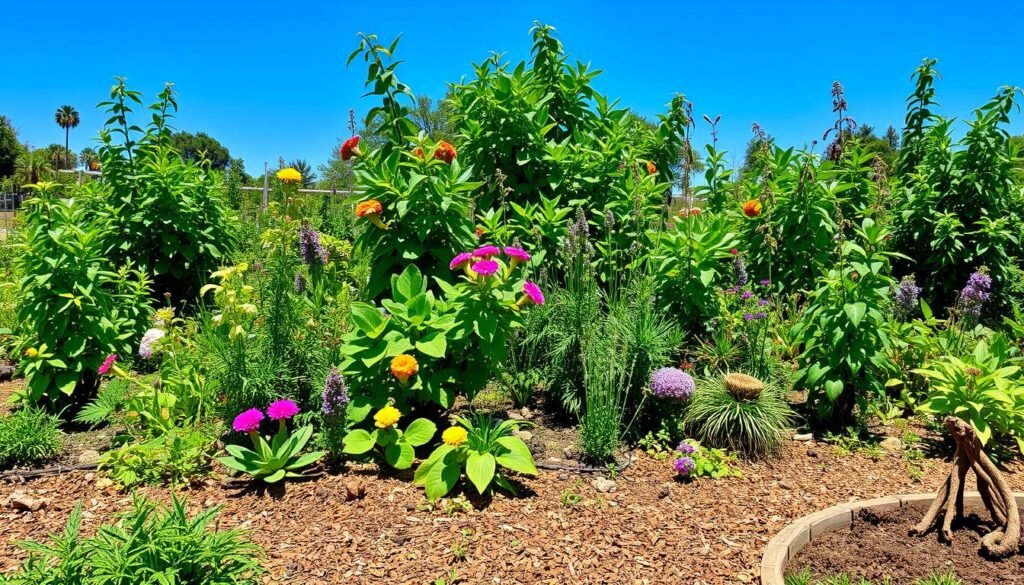
That is not a marketing claim. It is the result of thousands of years of adaptation. The deep roots of native grasses and flowers hold soil in place. The fungal networks beneath them cycle nutrients without help.
Read Also: Electronic-Resonance Enhanced Molecular Engineering for High-Efficiency Perovskite Solar Cells
Here is what that actually means for your garden, the plants that thrive in bad soil, and the honest limits of the "native" label.
The Root System Is the Whole Story
Most garden plants have shallow roots. They need regular watering because they cannot reach deep moisture. Native plants often send roots down far deeper.
The US Forest Service notes that "the deep root systems of many native Midwestern plants increase the soil's capacity to store water". That stored water does two things. It keeps the plant alive through dry spells. And it reduces runoff, which means less erosion and less flooding.
Why this matters for soil: Erosion strips the topsoil. Topsoil is where the organic matter and microbial life live. A plant with deep roots holds that layer in place.
A shallow-rooted ornamental does not. When rain hits bare ground or a shallow lawn, it runs off. When it hits a native perennial with a taproot, it soaks in. The Virginia DCR adds that native plants "reduce erosion" directly. That is not a side benefit. It is the foundation of soil health.
Native Plants for Poor Soil: The Ones That Actually Work
Poor soil means low nutrients, poor structure, or both. Most garden plants struggle there. Native plants that evolved in poor soil thrive. Fine Gardening's list of native plants for poor soils names three standouts:
Butterfly milkweed (Asclepias tuberosa). Zones 3–9. Bright orange flowers. A taproot that does not like being moved. It grows naturally in dry prairies and roadsides. It tolerates poor soil because it evolved in it.
Missouri primrose (Oenothera macrocarpa). Zones 3–8. Fleshy leaves and a massive tuber root. Extreme drought resistance. It blooms late in the day and into the morning. It wants poor, well-drained soil.
Common ironweed (Vernonia fasciculata). Zones 3–7. Upright stems and fibrous roots. Purple flowers in late summer. It handles difficult soils without amendment.
The honest caveat: "Poor soil" is not one thing. A sandy soil drains fast. A clay soil holds water and suffocates roots. A rocky soil has no depth. The plants above handle specific kinds of poor soil.
Butterfly milkweed wants dry, well-drained ground. Ironweed tolerates wetter conditions. Match the plant to your actual soil, not the label on the tag.
Perennial Flowers for Poor Soil: What the Research Shows?
A study from the Italian National Research Council tested 26 herbaceous species native to Italy and southern Europe for their performance in low-fertility soils . The findings are useful for anyone gardening in bad ground.
You Must Also Like: How Does Biodiversity Loss Accelerate Climate Change?
Species that produced low biomass in unfertile soils were better for long-term plantings. They did not try to grow huge. They survived. The list includes Calamintha nepeta, Campanula rapunculus, Dianthus carthusianorum, Verbascum blattaria, Nigella damascena, Salvia verbenaca, and Scabiosa columbaria.
Species that produced high biomass in fertile soils were more competitive. They wanted nutrients. Daucus carota, Matricaria chamomilla, Papaver rhoeas, and others fell into this group.
What this means for you: If your soil is genuinely poor, do not plant the high-biomass species. They will struggle. Plant the low-biomass species. They evolved to survive without much. That is the whole point of native planting in poor soil.
The Microbial Network Nobody Talks About
The Nature Conservancy describes the soil food web simply: "Insects that evolved with native plants feed on and help those plants flourish through pollination and the decomposition of organic matter, creating nutrients for the soil" .
That decomposition part is key. Native plants drop leaves, stems, and roots that local microbes know how to break down. The timing matches the microbes' life cycles. An exotic plant drops different material at a different time. The microbes may not process it as efficiently.
The practical consequence: Native plants build soil organic matter over time. Exotic plants often do not. That organic matter holds water, feeds microbes, and stores carbon. It is the difference between dirt and living soil.
The Honest Limits of the "Native" Label
Native is not a magic word. Three things get oversold.
"Native" is local. A plant native to Virginia is not native to California. A plant native to the coast may not thrive inland. The Virginia DCR emphasizes "plants within the region they evolved".
Buying a "native" plant from a national catalog may mean buying a plant that is not native to your specific soil and climate.
Native plants still need water to establish. The US Forest Service says native plants "save time and money by eliminating, or significantly reducing, the need for fertilizers, pesticides, water" once established.
"Once established" is doing a lot of work in that sentence. The first year or two, you water them. You weed around them. After that, they take care of themselves.
Some native plants are aggressive. The Virginia DCR notes that native plants can "help prevent the spread of alien species". That is true. But some native species spread aggressively in garden settings.
Common ironweed self-seeds. Fine Gardening warns that self-seeding "can become a problem". Native does not mean well-behaved.
The Final Thoughts
If your soil is poor and you want plants that work with it, start with the species that evolved for it. Butterfly milkweed for dry, sunny spots. Missouri primrose for rocky, well-drained ground. Ironweed for heavier soil. These plants do not need you to fix the soil first.
If you want to improve the soil itself, plant deep-rooted natives and leave the leaf litter. The roots hold the ground. The litter feeds the microbes. The microbes cycle nutrients.
That is the system. It works without fertilizer. It works without amendment. It works because the plants and the soil evolved together.
The honest limit: native plants are not instant. They take a season to establish. They do not look like a manicured lawn. They are better for the soil, but they are not a quick fix.
The soil ecosystem does not respond to quick fixes. It responds to the right plants, in the right place, left alone to do what they do.