
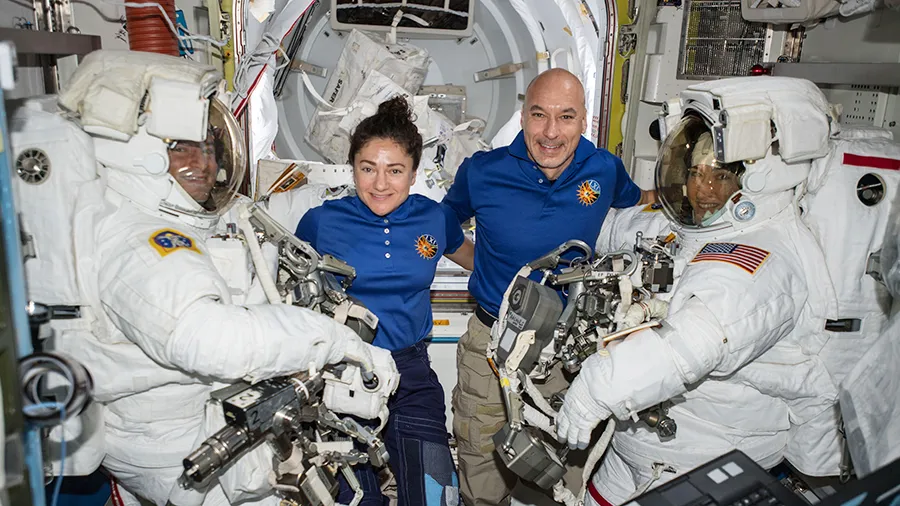
3D Blood Vessel Printing Aboard the ISS moved from experiment to active research in October 2026. NASA's Expedition 75 crew spent Tuesday processing vascular cell samples inside the BioFabrication Facility, printing blood vessels that gravity makes impossible to build on Earth.
I followed this research closely because it solves a problem I've written about for years. Earth-based bioprinting collapses under its own weight. Soft tissue sags. Scaffolding materials hold it together, but those materials often harm living cells.
Space removes that constraint entirely. The implications for cancer research go deeper than most headlines admit. This isn't just about growing spare parts. It's about building accurate disease models that could finally show how cancer spreads through the body.
Why Blood Vessels Collapse on Earth in Space?
Gravity destroys soft tissue engineering. That's the blunt truth.
When researchers print blood vessels on Earth, the structure sags under its own weight. Cells settle. Layers deform. To prevent collapse, scientists add thickeners or chemical scaffolding. Those additives keep the shape intact. They also introduce variables that don't exist in the human body.
Read Also: How Do Astronauts Regulate Body Temperature in Space?
In microgravity, everything stays where you put it. Bioink holds its position. Cells don't settle. The printed structure maintains its intended geometry without any supporting material.
NASA's own documentation explains the difference clearly. Gravity constrains tissue engineering by flattening and deforming 3D constructs. Microgravity allows larger, more accurate tissues to form.
This matters for cancer research because blood vessels feed tumors. A tumor without blood supply stays small. A tumor with blood vessels grows, spreads, and kills. Building accurate vessel models means studying that process in ways Earth labs cannot replicate.
What Expedition 75 Actually Did This Week?
The NASA report from October 20 describes the work in plain terms.
Flight engineers Luke Delaney and Jessica Watkins removed vascular cell samples from an incubator. They processed those cells with bioink.
Then they printed blood vessels inside the Columbus laboratory module's BioFabrication Facility. The finished structures went into a science freezer for preservation and eventual return to Earth. That sounds routine. It isn't.
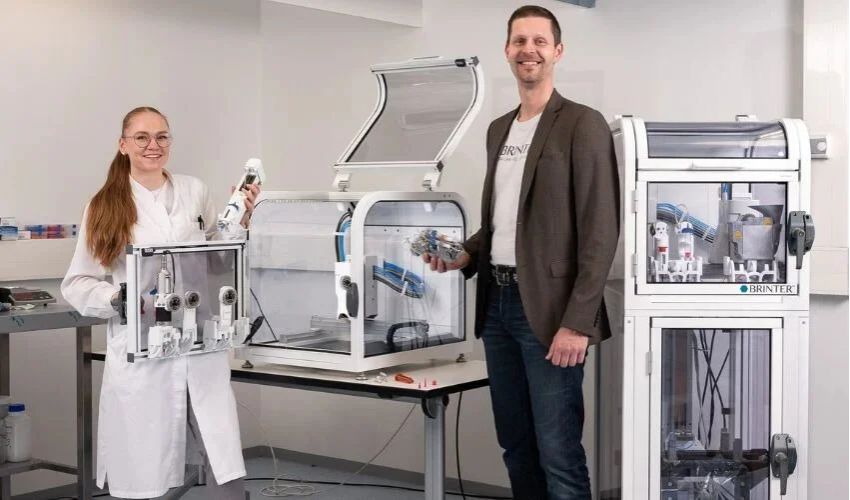
The BioFabrication Facility is the first American 3D printer capable of manufacturing human tissue in space. Redwire Space owns and operates it. The company has already printed knee meniscus and cardiac tissue in microgravity. Blood vessels and liver tissue come next.
Delaney also processed tumor samples inside the Kibo laboratory module's Life Science Glovebox. Those samples will return to Earth for analysis.
The goal: understand how cancer cells behave in weightlessness and whether that reveals genetic or cellular vulnerabilities that Earth-based research misses.
The Cancer Connection Nobody Explains Clearly
Here's where the research gets interesting. And where most articles fail.
Cancer cells don't just grow. They recruit blood vessels. That process is called angiogenesis. Without new blood vessels, tumors cannot grow beyond a few millimeters. Understanding how to stop that process is a major therapeutic target.
You Must Also Like: What Direction Is the Meteor Shower Tonight Near Sydney NSW?
But studying angiogenesis on Earth has limits. Blood vessel models made on flat surfaces don't behave like vessels in a body. Scaffolding materials interfere with cell signaling. Gravity distorts the structures.
Space-printed vessels offer something different. They form in three dimensions without artificial support. The cells organize more naturally. The resulting models could let researchers test anti-angiogenic drugs with far more accuracy.
The tumor samples Delaney processed add another layer. Cancer cells grown in microgravity may express different genes, activate different pathways, or respond differently to treatments. If researchers identify those differences, they could uncover targets that Earth-based studies never reveal.
Scientific Discoveries That Changed the World: Where This Fits?
I don't use that phrase lightly. Most "world-changing" science takes decades to prove itself. This research is early.
But the pattern matters. Blood vessel printing in space solves a specific, physical problem that has blocked tissue engineering for years. That's not hype. That's a technical breakthrough with clear applications.
The ISS National Lab frames it directly. Microgravity allows tissues to form in three dimensions without supporting architecture. That capability could lead to patient-specific replacement tissues, drug testing models, and eventually organ patches.
The cancer angle is the most immediate. Drug development fails because animal models and 2D cell cultures don't predict human responses well.
A 3D blood vessel model that accurately mimics human vasculature would give researchers a better testing platform. Better testing means fewer failed drugs. Fewer failed drugs mean lower costs and faster approvals.
Redwire's facility has already printed cardiac tissue and knee meniscus. Blood vessels are the next step. If those models prove reliable, the path from lab to clinic shortens.
The Limitations Nobody Wants to Admit
Space bioprinting has real constraints. I'd be lying if I said otherwise.
Scale. The BioFabrication Facility produces small samples. It's not manufacturing organs. It's testing whether the technology works and whether the tissues behave correctly.
Cost and access. Getting experiments to the ISS costs millions. Crew time is limited. Samples must survive launch, printing, conditioning, and return. Each failure costs months.
Conditioning time. Redwire identified that printed tissues need at least two weeks in orbit to stabilize before returning to Earth. That's a long window. Any equipment failure during that period wastes the entire effort.
The return problem. Tissues printed in microgravity don't stay intact once gravity returns. They flatten under their own weight. The conditioning process aims to prevent this, but it's not guaranteed.
Regulatory uncertainty. The NSF status report notes that sustainable biomanufacturing in low Earth orbit awaits a robust regulatory framework. No clear path exists yet for approving space-manufactured tissues for human use.
These aren't reasons to stop. They're reasons to stay honest about timelines. Space-printed blood vessels won't replace Earth-made grafts next year. They're research tools first. Therapies come later.
Who Benefits From This Research (And Who Doesn't)
Benefit now: Researchers studying angiogenesis. Pharmaceutical companies testing cancer drugs. Tissue engineers learning how to build complex structures without scaffolding.
Benefit in five to ten years: Patients needing vascular grafts. Cancer patients enrolled in trials for drugs tested on better models. Organ transplant waiting lists, if the technology scales.
Not benefit anytime soon: Anyone expecting a space-printed organ replacement. The scale doesn't exist. The regulatory path doesn't exist. The cost doesn't make sense for individual treatments.
The honest framing: this is foundational research. It solves a specific problem. It opens doors. It doesn't deliver cures today.
The Bigger Picture for Space Medicine
Every astronaut who spends months on the ISS loses bone density, muscle mass, and cardiovascular fitness. Those changes mirror rapid aging on Earth. Understanding how microgravity accelerates dysfunction could reveal mechanisms that drive age-related diseases, including cancer.
The blood vessel research fits into that larger puzzle. Vascular health declines with age. Cancer risk rises with age. If microgravity accelerates both, studying the process in space could compress decades of Earth-based observation into months.
NASA's research portfolio now includes 3D bioprinting of blood vessels, tumor sample analysis, and tissue chip experiments that model human organs. Each piece adds data. The full picture isn't clear yet. But the direction is deliberate.
The Final Thoughts
The 3D Blood Vessel Printing Aboard the ISS work happening right now is real. It's funded. It's producing data. The BioFabrication Facility has already printed human tissue in space.
The cancer connection is genuine. Better blood vessel models mean better drug testing. Better drug testing means faster progress against diseases that kill millions.
But this isn't a miracle. It's a tool. It solves one problem: gravity's interference with soft tissue engineering. It doesn't solve cancer. It might help researchers get closer.
That's enough. Science advances through small, specific breakthroughs. This is one of them. The tumors processed this week will return to Earth. The blood vessels will follow. Researchers will study them. Some findings will matter. Some won't.
The work continues. That's how discoveries that change the world actually happen. Not in a single moment. In months of samples, data, and quiet persistence on a laboratory orbiting 400 kilometers above your head.