
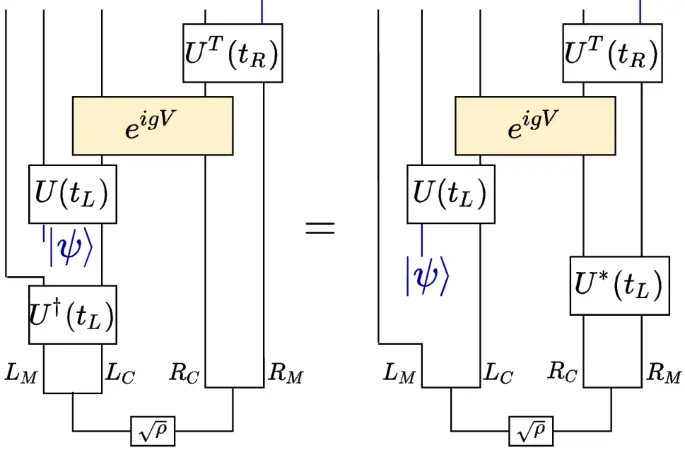
I remember reading about quantum scrambling a few years back. The idea made my head hurt. Information gets mixed up so badly inside a quantum computer that it effectively disappears.
Like pouring milk into coffee. You cannot unmix it. That was the assumption. Turns out, we were wrong. A graduate student named Rishik Perugu did the calculations that cracked the problem open.
Let me walk you through what this actually means. No math degree required. I promise.
What Is Quantum Scrambling?
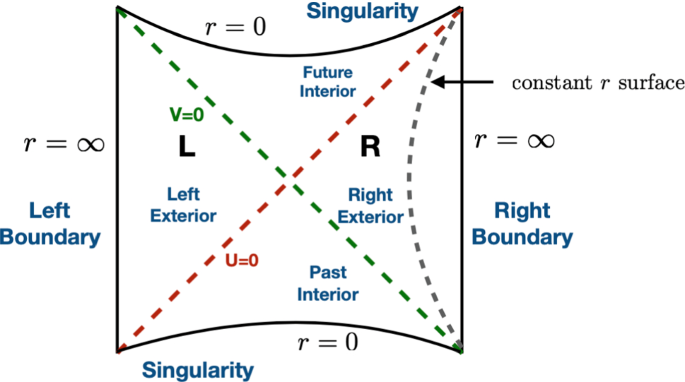
You have a cup of black coffee. You pour in cream. You stir it.
After a few seconds, the cream spreads everywhere. You cannot separate it back out. The information about where the cream started is gone.
Read Also: The Move From Theoretical Quantum to Practical Quantum Computing
That is scrambling. When qubits interact, their information spreads out across the whole system. It becomes shared. Entangled. Scrambled.
Thomas Scaffidi, the UC Irvine physicist who led the study, puts it this way: If you try to locally encode some information in the qubits, after a while, the encoded information is going to spread out over many qubits and will be effectively lost.
You cannot read it back. The computation fails.
This is a massive problem for quantum computing. And everyone thought it was permanent.
The Breakthrough: Reversibility Is Universal
Scaffidi and Perugu asked a different question. What if the information is not destroyed? What if it is just hidden in an incredibly complex way?
They looked at the microscopic laws of physics. At the smallest level, the universe does not care about time direction. Two particles collide. You play the movie forward. It makes sense. You play it backward. It also makes sense.
That reversibility, it turns out, applies to quantum scrambling. Perugu discovered something important. This reversible behavior appears in many quantum systems. Including quantum computers.
The catch? You need extremely fine control. Scaffidi says it requires an extremely fine-tuned and very fine level of control on your system. Think of it like balancing a pencil on your fingertip. Possible. But hard.
What Google Did: The 65-Qubit Time Machine
The UC Irvine work is theoretical. But experiments are already happening. They built a 65-qubit circuit on their superconducting processor. Then they ran a time-reversal experiment. Here is what they did.
They scrambled quantum information. Let it spread. Then they ran the system backward with a precisely tuned intervention. The information came back. Not all of it. Not perfectly. But enough to measure. Enough to prove the principle.
The team measured something called an out-of-time-order correlator. OTOC for short. This is the mathematical tool that tells you how scrambled information has become and whether it can return.
Google's experiment showed that information which appeared completely scattered could be reassembled. The key was a quantum phenomenon called constructive interference. Multiple quantum states overlap and strengthen the signal instead of canceling it out.
Here is the crazy part. Simulating that 65-qubit OTOC measurement on Frontier, the world's fastest supercomputer, would take about 3.2 years. Google's quantum computer did it in 2.1 hours.
That is a practical quantum advantage. Not a made-up benchmark problem. A real demonstration that quantum computers can do something useful that classical computers cannot keep up with.
The Chinese Breakthrough: Taming Quantum Chaos
While Google worked on scale, a team in China tackled a different problem. Quantum scrambling runs into chaos. Tiny errors in reversing the system get amplified exponentially. The butterfly effect, but quantum.
You Must Also Like: Detecting Earthquakes With Android AEA System: How It Works?
They validated a theory called "scramblon theory." This theory predicts how information scrambles and how errors behave during reversal.
The team measured the OTOC. Then they used scramblon theory to subtract the errors caused by imperfect reversal. What remained was the pure quantum chaotic behavior.
For the first time, they extracted the quantum Lyapunov exponent. That is the number that tells you how chaotic a quantum system is.
So What? Why Should You Care?
two reasons this matters right now.
First, better quantum computers. Scrambling is the enemy of quantum computation. If we can reverse it, we can also prevent it. Or recover from it when it happens. That means longer-lasting qubits and more reliable calculations.
second, new ways to prove quantum advantage. OTOC measurements are extremely hard for classical computers to simulate. Google just showed that a 65-qubit OTOC calculation takes a supercomputer years. As quantum computers scale up, these measurements become a practical way to demonstrate quantum supremacy.
The Limitations Nobody Talks About
Let me be straight with you. We are not reversing time like in a movie. The reversal only works for the quantum state. Not for macroscopic objects. You cannot unscramble an egg or un-break a glass.
The level of control required is extreme. Scaffidi emphasizes this repeatedly. Fine-tuned interventions. Precise timing. No room for error. Current experiments work with small numbers of qubits.
65 qubits is impressive. But useful quantum computers will need thousands or millions. And the Chinese experiment worked with millions of spins, but those spins were in a solid crystal at room temperature. Scaling that to a programmable quantum computer is a different challenge.
This is foundational science. Important. Exciting. But not ready for your laptop.
The Final Thoughts
Quantum scrambling reversal is real. UC Irvine proved it is theoretically possible. Google demonstrated it on a 65-qubit processor. Chinese researchers showed it works even with quantum chaos and experimental errors.
The information does not disappear. It just gets hidden. And we are learning how to bring it back. We are still years away from practical applications. But the foundation is laid.
Next time someone tells you that you cannot unscramble an egg, you can smile. At the quantum level, maybe you can.