
I remember exactly where I was when SpaceX first landed a Falcon 9 booster. December 2015. I was sitting in my living room, watching a live stream. The rocket came down, landed on that drone ship, and I thought, "That changes everything."
It did. It changed the economics of spaceflight. It made launches cheaper. It made them more frequent. It made the impossible seem routine. Now, more than a decade later, it is China's turn.
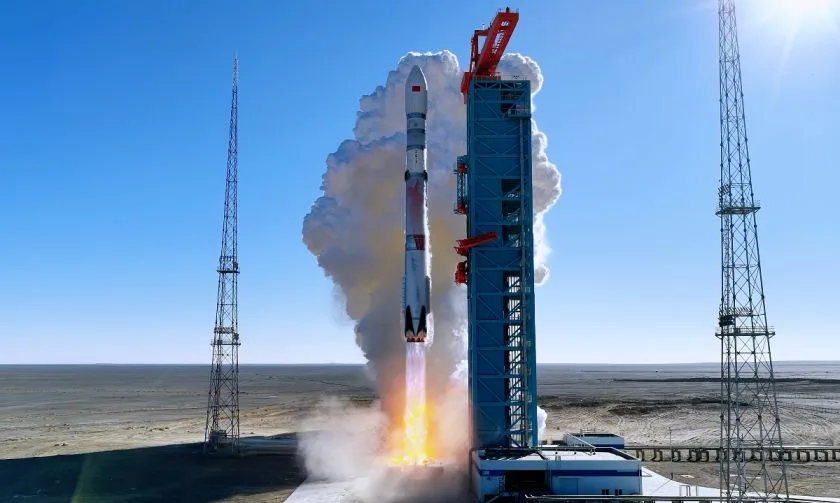
On Friday, July 10, 2026, at 12:15 PM Beijing time, the Long March 10B rocket lifted off from the Hainan Commercial Space Launch Site. It carried a satellite into orbit. That part was routine. But what happened next was not.
About six minutes after the first and second stages separated, the first stage made a controlled vertical descent. It came back down. And it landed. Not on a drone ship with landing legs. Not on a ground pad. It landed in a net. A giant net attached to a floating platform.
The China Enters Reusable Rocket Era with that single moment. They are the second country in the world to recover an orbital-class rocket. And they did it their own way.
How the Long March 10B Pulled It Off?
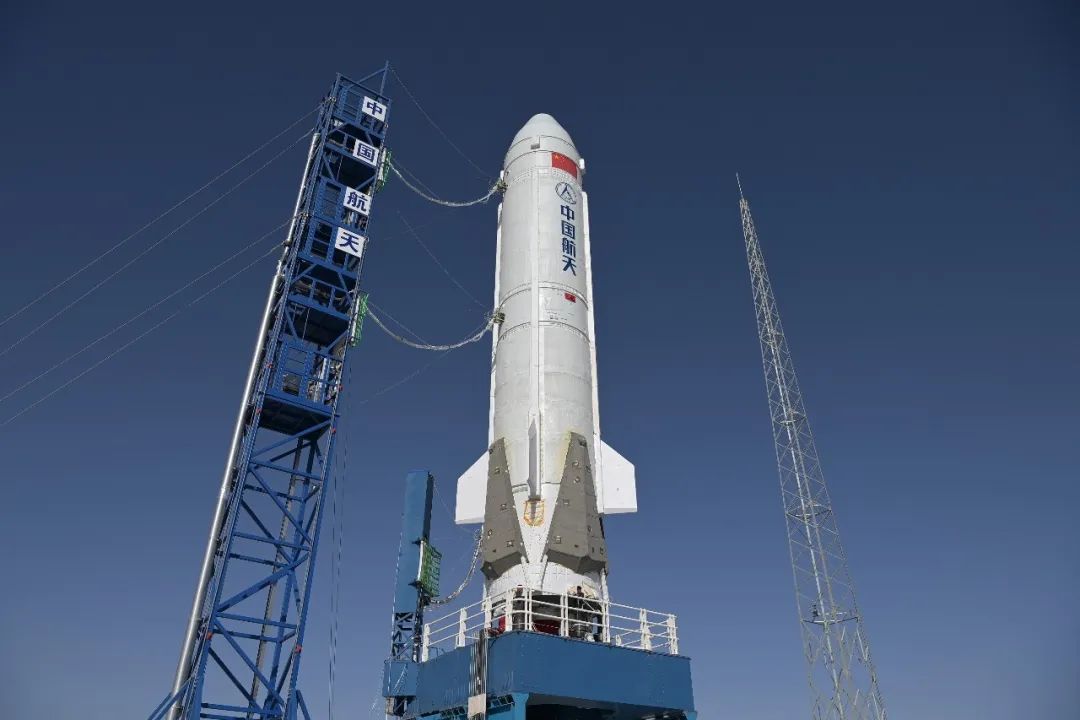
The Long March 10B is not a copy of the Falcon 9. It is a different approach entirely.
The rocket is about 63 meters tall. That is roughly the height of a 20-story building. It has a diameter of 5 meters. It weighs about 760 metric tons at liftoff. Its seven engines produce about 890 metric tons of thrust.
In its reusable configuration, it can carry 16 metric tons to low-Earth orbit. That puts it in the same class as the Falcon 9.
The rocket burns liquid oxygen and kerosene in its first stage. The second stage uses liquid oxygen and methane. That methane engine is interesting. It is a fuel that is easier to produce on Mars. But that is a story for another day.
The Net-Based Recovery System
This is where the Long March 10B is different from anything else in the world.
SpaceX lands its Falcon 9 boosters on deployable legs. The rocket comes down, extends its legs, and lands on a drone ship or a ground pad. It is a proven system. They have done it more than 600 times.
China went a different route. The Long March 10B does not have landing legs. Instead, it has landing hooks. When the booster comes down, it hooks onto a net suspended on a sea platform.
The net is attached to a recovery ship called "Linghangzhe" ("Navigator"). The ship is 144 meters long and 50 meters wide. It has a displacement of 25,000 tons. That is a big ship. It needs to be. Catching a falling rocket is not easy.
The net itself is a "well"-shaped, high-strength buffer system. It is designed to soften the impact of the landing. It acts like a giant catcher's mitt.
There are advantages to this approach. No heavy landing legs means less weight on the rocket. That means more payload capacity. The net also gives more margin for error. If the rocket is a little off target, the net can still catch it.
But it is also a complex maneuver. The rocket and the recovery ship have to coordinate their movements. The ship is on the ocean. It is moving with the waves. The rocket is coming down from space. They have to meet in the middle.
The "Aerial Gymnastics" of Recovery
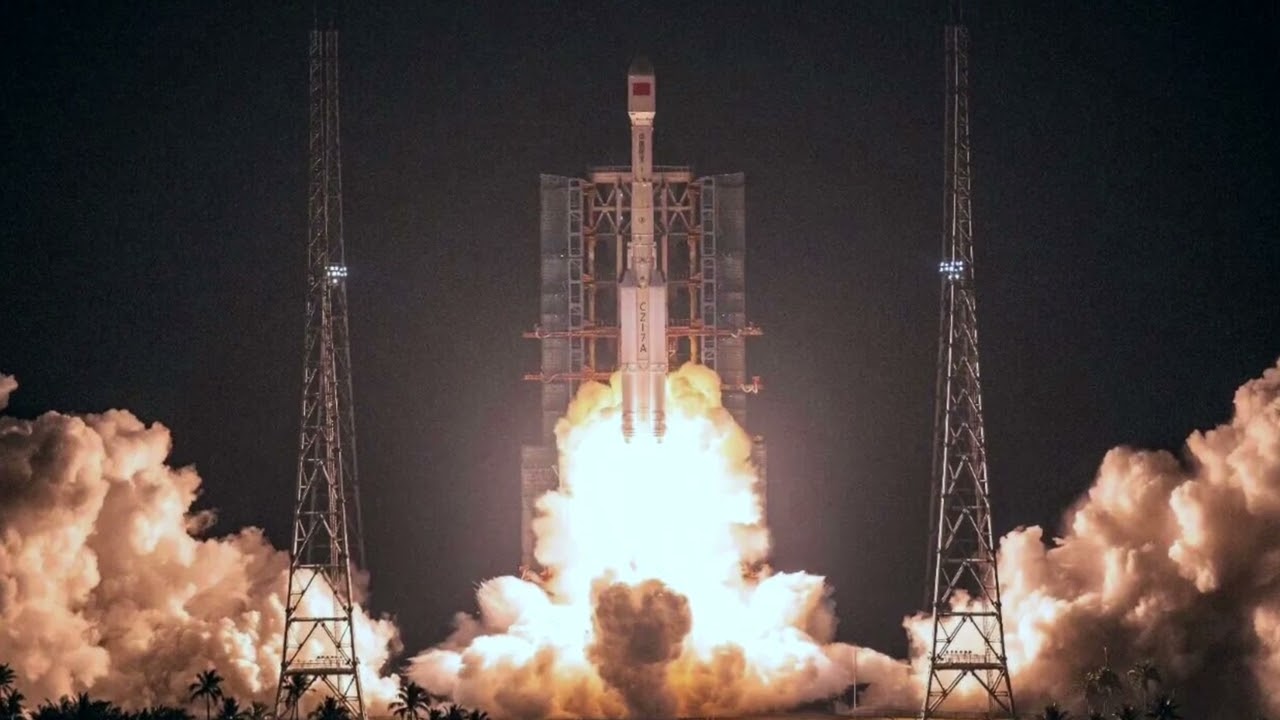
The recovery process is incredibly complex. Chinese engineers compare it to a gymnast performing a routine.
After the first stage separates from the second stage, it begins its "return journey". First, it adjusts its attitude. It turns around and points its engines toward the direction of travel. Then, it fires its engines to slow down. This is called a boost-back burn.
Then it enters the atmosphere. It uses aerodynamic drag to slow down further. This is a critical phase. The rocket is moving at several thousand kilometers per hour. The air is thick. The heat is intense.
You Must Also Like: Solar Cycle 25 Peak Predictions: Are We Ready for a 2026 "Superflare"?
Finally, it makes its final descent. It fires its engines one last time to slow to a gentle landing speed. And then it hooks onto the net.
All of this happens in about six minutes.
The Race to Catch Up
China has been working on reusable rocket technology for nearly a decade. They have conducted low-altitude hover tests and orbital booster recovery experiments.
But they have also had failures. Previous attempts by LandSpace and the China Aerospace Science and Technology Corporation failed to complete the final landing stage.
This time, they succeeded.
The successful test puts China closer to matching the reusable rocket capabilities of American firms. It is a technology seen as key to both space exploration and building satellite infrastructure.
China's state-owned space contractor, the China Aerospace Science and Technology Corporation (CASC), announced the success on social media. "This mission marks my country's first successful controlled recovery of a launch vehicle and the world's first network-based recovery of a launch vehicle," they said.
Why Reusable Rockets Matter?
Rockets are expensive. Traditionally, they are disposable. You use them once. Then they fall into the ocean or burn up in the atmosphere. That is like building a new airplane for every flight.
Reusable rockets change that math. You can use the same booster multiple times. That dramatically lowers the cost of access to space.
SpaceX has proven this model works. The Falcon 9 now launches about 150 times a year. Its boosters are reused dozens of times.
China wants to do the same thing. A successful reusable launch system is expected to lower launch costs and support the country's rapidly expanding commercial satellite network.
The Long March 10B is designed for commercial missions. It can deploy low-Earth-orbit satellite internet constellations and launch large commercial satellites.
The Commercial Space Race
China is not just relying on its state-owned space program. Private Chinese aerospace firms are also accelerating efforts to develop reusable rockets.
The government has relaxed IPO regulations to help these companies raise capital. 2026 is seen as a key year for reusable rocket technology validation. Both state-owned enterprises and private companies are pursuing multiple technical paths.
The Beijing Economic-Technological Development Area has gathered more than 220 aerospace enterprises. They have built a complete industrial ecosystem. This launch was the 14th mission of the "Yizhuang Arrow" series in 2026.
The Bigger Picture
The Long March 10B is part of the Long March 10 family. This family of rockets is being developed for China's planned crewed lunar missions before 2030.
The Long March 10B could also provide data and validate technologies relevant to the broader lunar program.
China also has other ambitious plans. It is working on a moon mission in 2026. It is developing its own space station. It is building a satellite internet constellation.
Reusable rockets are a key enabler for all of this. They make it cheaper to launch satellites. They make it cheaper to send astronauts to the moon. They make it cheaper to do everything in space.
What Comes Next?
China plans to refly the Long March 10B's first stage by the end of this year. That will be the real test. Can they do it again? Can they make it routine?
If they can, they will have achieved what only SpaceX has done before. They will have a fully reusable orbital-class rocket.
The industry expects that in the next three to five years, China's reusable rockets will enter a phase of relatively small-batch, routine launches.
The Final Thoughts
On July 10, 2026, China entered the reusable rocket era. They did it with a unique approach. A net. A ship. A rocket that hooks onto it. It is not the same as what SpaceX does. It is different. It is innovative. And it works.
The Long March 10B is China's first reusable launch vehicle to successfully complete a recovery mission. It represents a historic breakthrough in China's reusable rocket technology.
The space race is not over. It is just getting started. And now, there are two players in the reusable rocket game.