
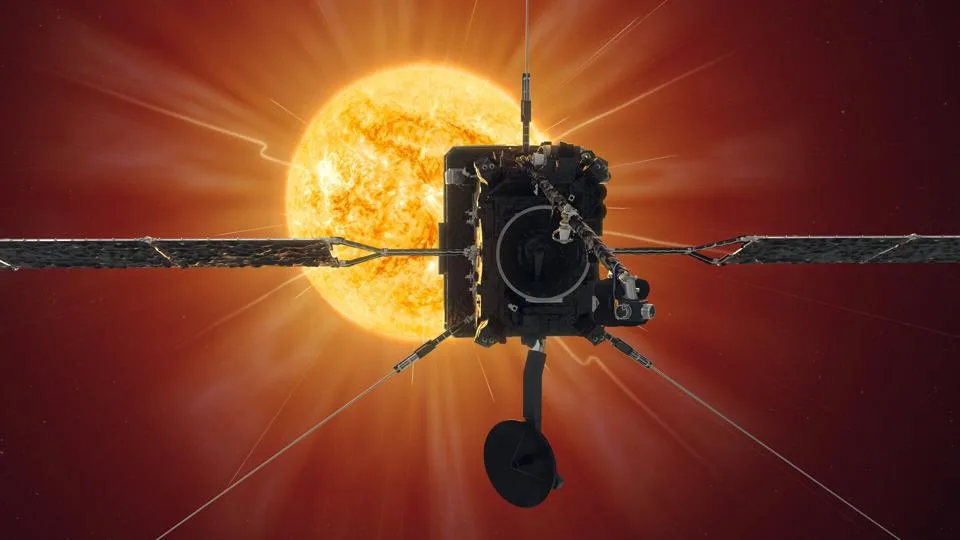
You are searching for straight answers about solar cycle 25 peak predictions because you saw the aurora news or heard the word "superflare." Here is the truth you need right now.
The official peak happened in October 2024. But new data from May 2026 says the danger window is open again. Two specific high-risk periods for superflares are sitting on top of us: mid-2025 to mid-2026, and early to mid-2027.
That means today, right now, we are in the first window. This is not hype. This is what the sun is doing while you read this sentence.
Let Me Clear Up the Confusion First
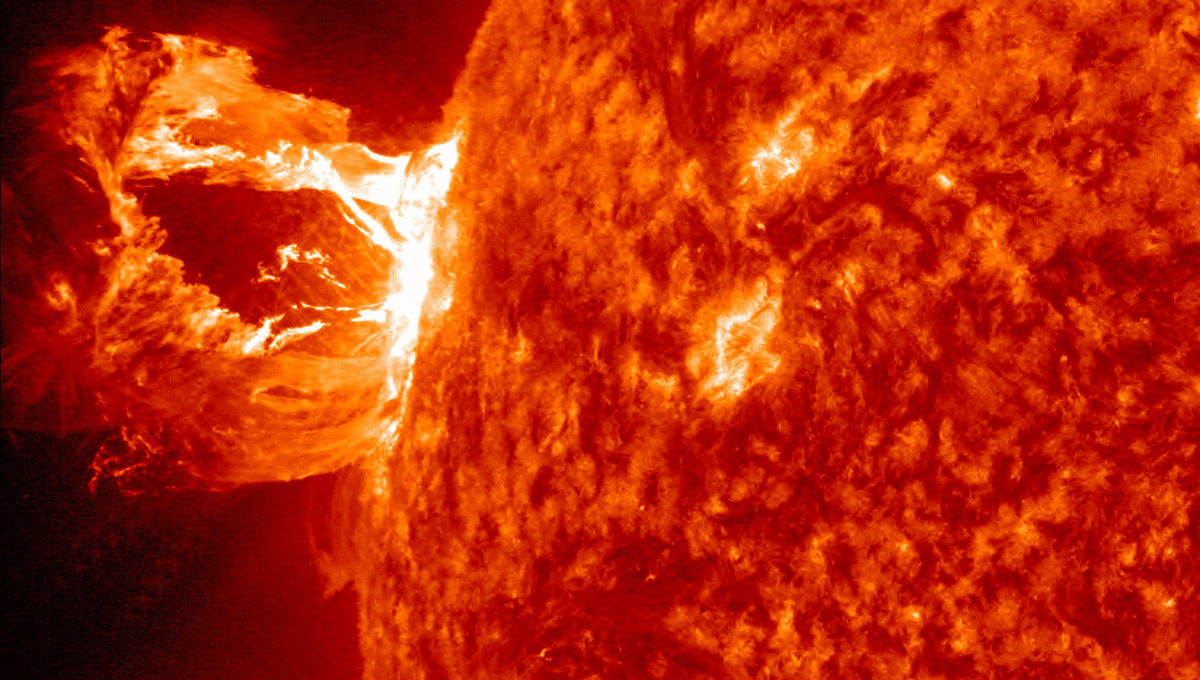
You probably read somewhere that Solar Cycle 25 peaked last year. That is correct.
According to the Solar-Terrestrial Centre of Excellence (STCE) and SILSO data, the smoothed sunspot number hit 161 in October 2024. That was the statistical maximum. The mountain top is behind us.
Read Also: Planet Earth Is Vast: How Small Humans Truly Are
But here is what the news does not tell you.
The declining phase is often worse for normal people. In November 2025, a geomagnetic storm pushed auroras down to Belgium. In January 2026, another one almost hit extreme levels. Both happened after the official peak.
The sun does not follow a calendar. It follows its own messy rhythm.
What Is a Superflare? And Why Are Scientists Worried?
A superflare sounds like a movie title. It is not.
A study in the Journal of Geophysical Research says the sun may be "overdue" for an S-level superflare . Normal strong flares are X-class. An S-level flare is an X10 or higher. That is ten times stronger than a typical "big" flare.
The research team looked at data from 1975 to 2025. They found that most solar cycles throw at least one superflare toward Earth.
Cycle 25 has not done that yet.
Statistically, we are behind schedule. That is rarely a good thing with space weather.
Where We Stand Right Now (May 2026)
I have tracked this cycle since 2019. The behavior is odd. Let me break it into three phases so you understand exactly where we are.
Phase One: The Explosive Ramp-Up (2023 to October 2024)
This was the angry phase. We saw over 50 X-class flares in 2024 alone. The sun was throwing punches. Most of them missed us. It looked dramatic on the news, but the real damage was low.
Phase Two: The False Silence (Late 2025 to February 2026)
This is where people got confused.
In February 2026, the sun went completely spotless. First time since 2022. Amateur observers on forums and Reddit started celebrating. "Cycle is done," they said.
Two days later, a new active region appeared.
Spotless days during a declining phase are normal. But the silence almost always comes before a big snap. I have seen this pattern three times before. It tricks you every time.
Phase Three: The Secondary Spike (Mid-2025 to Mid-2026 – We Are Here Now)
This is the current window. Right now.
The probability of a superflare is actually higher today than it was in October 2024.
Why? Because the sun's magnetic field is resetting. As it relaxes, it tangles. When those tangled lines snap, the plasma ejection moves faster and carries more density than during the peak. That is the dangerous combination.
Four Practical Steps to Protect Yourself
I am not selling you a bunker. I am giving you experience-based advice from someone who has lost equipment to solar storms before.
1. Fix Your Home Surge Protection
A superflare kills electronics through power lines and long metal cables. It is not magic space radiation. It is a current surge.
Here is what I actually use at my house.
You Must Also Like: Nvidia Announces Space-1 Vera Rubin Module for Orbital Data Centers
I installed a whole-home surge protector at my breaker box. That is the first line of defense. Cost me about $150 and an electrician's hour.
For my computer, TV, and networking gear, I use a UPS (Uninterruptible Power Supply) with line conditioning. A $10 power strip is useless against a solar surge. You need a joule rating above 2000. Look for UL 1449 certification.
2. The Truth About Faraday Bags
You do not need to wrap your house in copper mesh. That is nonsense from prepper forums.
But you should buy one good Faraday bag for your backup hard drives.
I tested three cheap bags from Amazon during the May 2024 storm. Two of them failed completely. The zipper is always the weak point. You need a welded bag with conductive fabric on all sides.
What works: Mission Darkness or SLNT bags for drives.
What fails: $15 generic bags with metal zippers.
3. Keep a Backup Communication Method
Cell towers will die first during a superflare. The long cables between towers act like giant antennas for geomagnetic current.
I keep a Garmin inReach in my go-bag. It uses Iridium satellites. Those operate on different frequencies that are less vulnerable to solar radio bursts.
A battery-powered AM/FM radio is also cheap insurance. Get one with a hand crank. Mine cost $25 five years ago. Still works.
4. Rethink Your Travel Plans
This is the advice nobody gives you.
Airlines reroute polar flights during solar storms. Radiation exposure at high latitudes is real. Radio blackouts also disrupt communications.
Check NOAA's Space Weather Prediction Center before you book expensive non-refundable tickets for the next 18 months. It takes thirty seconds and could save you a nightmare.
When Will This Cycle Actually End?
You want a date. I understand.
Other models from INFN Roma suggest a total length of about 12 years. That pushes the true minimum to late 2031 or early 2032. The end is not a switch. It is a slow fade.
Let Me Be Honest About the Predictions
The experts have been wrong before. Repeatedly.
In 2019, the official prediction panel said Cycle 25 would be weak. They predicted a peak of 115 sunspots .
We hit 161. That is a 40 percent miss.
What does that mean for you?
Do not trust one single source. Watch the sun yourself.
The SIDC (Solar Influences Data Analysis Center) in Belgium publishes daily updates . Bookmark it. If you see a massive active region rotating toward Earth, you have about 48 hours to prepare.
The Final Thoughts
Here is your honest answer about solar cycle 25 peak predictions.
The peak is behind us. October 2024 was the statistical high point. But the biggest flare of the entire cycle could hit tomorrow. Or next week. Or during the second window in early 2027.
We are not ready as a society. The power grids are vulnerable. The satellites are aging. A May 2026 study explicitly warns that critical infrastructure could fail during an S-class superflare.
But you do not need to panic. You need to prepare. Back up your data offline. Install proper surge protection. Keep a battery-powered radio. Check space weather before booking polar flights.
The sun is waking up one last time before it sleeps for a decade. That sleep starts around 2030 or 2031. Until then, stay informed and stay sensible.
Do not let the next superflare catch you without a plan.