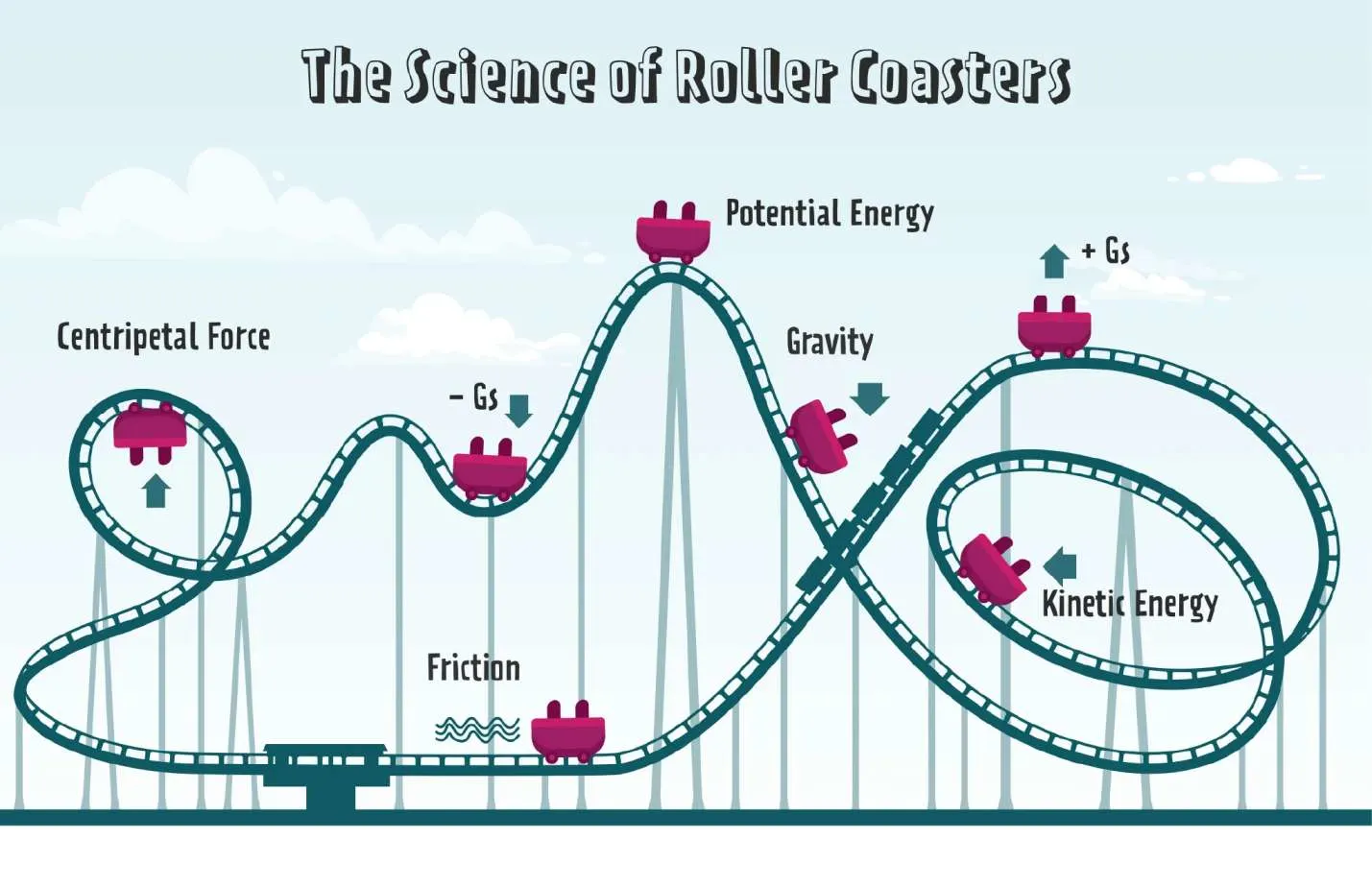
The physics behind roller coasters comes down to one simple trade. Height buys speed. Speed buys height. Nothing else powers the ride. Roller coasters have no engine after the first lift hill. Gravity does the rest.
The chain pulls you up, storing energy in your height. The drop converts that stored energy into motion. Every hill after that shrinks because friction steals a little energy each time. That's the whole system.
But the interesting part sits in the details why loops aren't circles, why the back seat feels different from the front, and why the thrill isn't actually about speed at all. Here's how the machine actually works, from the lift hill to the final brake run.
Roller Coaster Energy Transformation: The Only Rule That Matters
Energy cannot be created or destroyed. It only changes form . Roller coasters live and die by this rule.
Read Also: How to Calculate Orbital Decay Rate: The Step-by-Step Satellite Guide
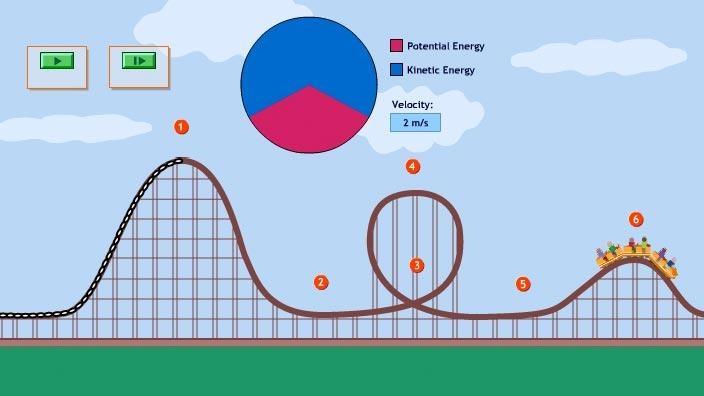
At the top of the first hill, the train holds gravitational potential energy. The formula is simple: mass times gravity times height (PE = mgh). A heavier train holds more energy. A taller hill holds more energy.
As the train drops, potential energy becomes kinetic energy. The formula: one-half mass times velocity squared (KE = ½mv²). Speed increases as height decreases. The bottom of the drop is the fastest point.
Then the train climbs the next hill. Kinetic energy converts back to potential energy. The train slows down. It reaches the top, and the cycle repeats.
Why the first hill is always the tallest: Friction and air resistance bleed energy on every run. The wheels grind against the track. The air pushes back. Each conversion loses a little energy to heat.
A coaster designer must build the first hill tallest so the train has enough energy to clear every hill that follows. If the second hill were taller, the train would stall and roll backward.
How Do Roller Coasters Work Without an Engine?
They don't need one after the lift. The chain lift or cable does one job: drag the train to the top of the first hill. That's the only powered moment of the entire ride.
Older coasters use a chain running under the track. A hook on the train catches the chain and gets pulled up. Modern launches use electromagnets or compressed air to shoot the train forward in seconds.
Both methods do the same thing: inject energy into the system at the start.
After that, gravity takes over. The train coasts. It climbs and falls, trading energy back and forth. Brakes at the end kill the remaining kinetic energy and bring the train to a stop.
Why Loops Aren't Circles (And Why That Matters)?
A circular loop would hurt. The physics explains why.
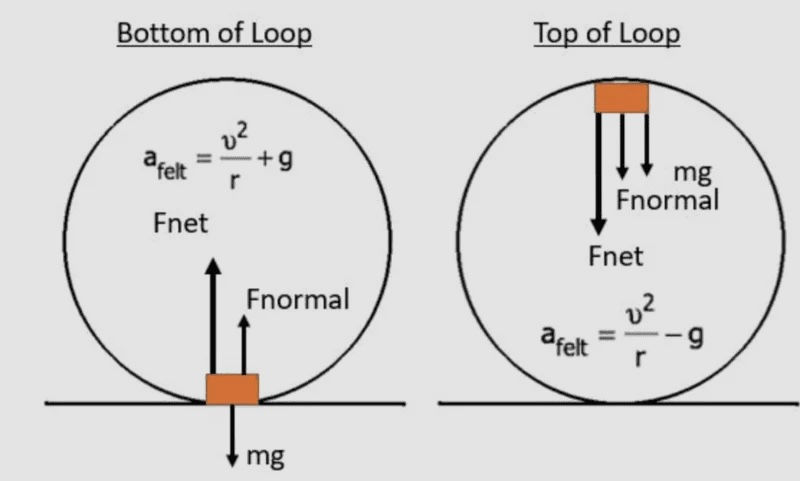
At the top of a loop, gravity pulls the train down. The track also pushes down on the train to keep it moving in a curve. The faster the train goes, the harder the track must push.
You Must Also Like: The Passive Safety Blueprint: Why Thorium Molten Salt Reactors Defy Nuclear Meltdowns?
If the train moves too slowly at the top, the track can't push down hard enough, and the train falls off the rails. The minimum speed at the top of a loop comes from this balance: velocity squared divided by radius must equal gravity.
If the radius is small, the required speed drops.
The clothoid shape fixes this. Real loops are teardrops, not circles. The top curves tightly. The bottom curves gently. The tight top keeps the train pressed against the track at low speed.
The gentle bottom reduces the crushing force on riders when the train enters the loop at full speed.
A circular loop would demand a huge radius at the bottom to avoid blackouts, which would make the top too wide and unsafe. The clothoid solves both problems at once.
The Thrill Isn't Speed. It's the Force You Feel.
Here's the misconception most people carry: fast equals thrilling. It doesn't.
You can drive 120 km/h on a highway and feel nothing. You ride a coaster at 80 km/h and scream. The difference is acceleration—changes in speed and direction.
Your body feels weight through contact forces. The seat pushes up on you. That push is the normal force. When the coaster drops, the seat pushes less. You feel light. When the coaster bottoms out and climbs, the seat pushes harder. You feel heavy.
At the top of a hill, if the train moves fast enough, the seat barely touches you. That's airtime—the floating sensation riders chase . At the bottom of a dip, the seat slams into you. That's the heavy, pressed-into-your-seat feeling.
The front seat gives a different ride from the back. The back seat gets whipped over the crest of a hill faster because the train pivots around its center. The front seat hangs at the top for a split second longer, stretching out the float time. Neither is "better." They're different physics.
What Actually Slows the Train Down?
Friction and air resistance. Every wheel bearing has drag. Every car pushes through air. The energy lost to these forces never comes back.
That's why the hills shrink. The first drop might be 60 meters. The second hill 45 meters. The third 30 meters. Each one smaller than the last. The train has less energy to spend because friction already took its cut.
Designers calculate this loss carefully. They know the mass of the train, the height of the first hill, and the friction characteristics of the wheels.
They build the track so the train barely clears the final brake run at the end . If they get the math wrong, the train stalls on the last hill and riders get evacuated by ladder.
The Safety Physics Nobody Talks About
The forces riders feel are measured in g-forces. One g is normal gravity. At the bottom of a steep drop, riders might feel four or five gs. That means their body feels four or five times heavier.
Sustained high g-forces push blood away from the brain. Greyout and blackout follow. Designers keep the bottom of drops gentle for this reason. The clothoid loop shape exists partly to prevent riders from passing out.
At the top of hills, negative g-forces create airtime. Too much negative g, and riders feel like they're falling out of the seat. Restraints handle that. The physics of the track and the physics of the harness work together.
The Final Thoughts
The physics behind roller coasters is a closed loop of energy conversion. The lift hill stores energy. The drop spends it. The next hill saves what's left. Friction taxes the whole system, so every hill shrinks.
The loop shape exists to keep forces survivable. The thrill comes from acceleration, not speed.
Once you see the pattern, every coaster becomes readable. You can look at a track and predict where the airtime lives, where the heavy forces hit, and why the first hill towers over everything else. That's the physics. The screaming is just a bonus.