

A discarded SpaceX rocket stage is about to crash into the Moon. The 4,000-kilogram piece of space junk is expected to hit the lunar surface on August 5, 2026, at around 2:35 AM Eastern Time.
It is moving at roughly 5,400 miles per hour. The impact will create a new crater and kick up a massive plume of dust. While the event poses no danger to Earth, it has raised questions about space debris and who is responsible for cleaning up the mess.
A Falcon 9 Rocket's Unplanned Lunar Mission
From Launch to Junk
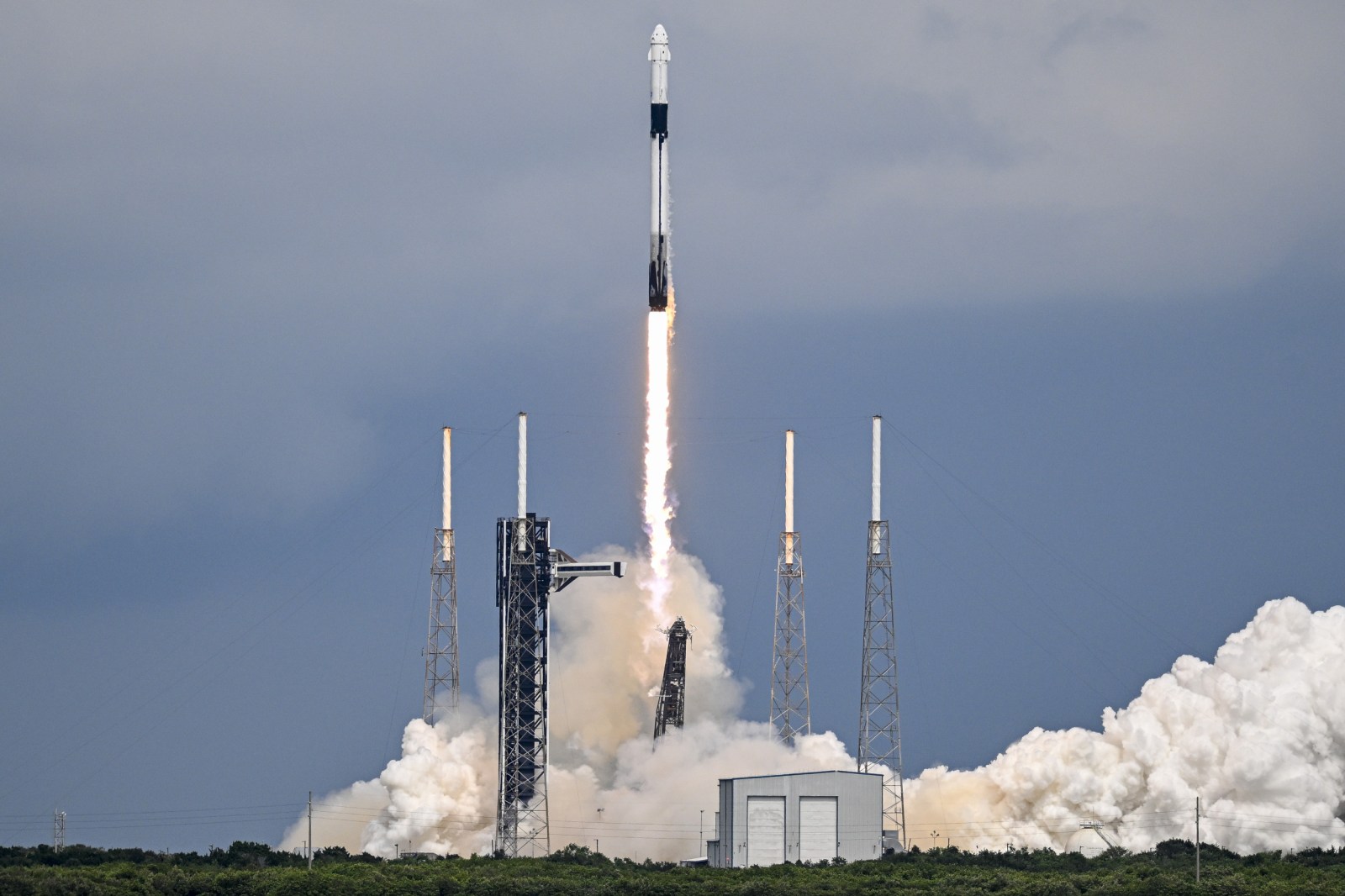
The rocket is the upper stage of a Falcon 9 that launched on January 15, 2025 . It carried two lunar landers: Firefly Aerospace's Blue Ghost 1 and Japan's Resilience. The mission was a success. The upper stage did its job, pushing the landers toward the Moon. Then it was discarded.
Read Also: China Enters Reusable Rocket Era with Milestone Orbital Recovery
Normally, these spent stages fall back to Earth. They burn up in the atmosphere or crash into the ocean. But this mission was different. It required more thrust. The upper stage ended up in a high orbit that kept it wandering around the Earth-Moon system.
The Slow Drift Towards Impact
For 18 months, the rocket stage drifted . It was a piece of junk, tumbling through space. Then, things changed. The combined gravitational pull of the Earth, Moon, and Sun nudged it off course.
Even the faint push of sunlight, called radiation pressure, played a role . These small forces slowly altered its path, sending it on a collision course with the Moon.
Astronomers spotted the trajectory. Bill Gray, who creates widely-used astronomy software, identified the impact path . NASA later confirmed the stage has a 100% chance of hitting the Moon . The agency has been tracking the object and plans to observe the impact for scientific purposes .
The Impact: What Happens When a Rocket Hits the Moon?
Speed, Location, and Crater Size
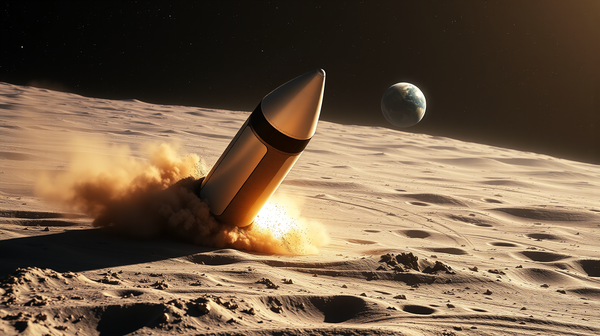
The Falcon 9 upper stage is expected to strike the Moon near the Einstein Crater on the Moon's western limb . It will hit at a speed of around 2.43 kilometers per second (about 5,400 mph) . That is more than seven times the speed of sound.
You Must Also Like: Space Traffic Management IELTS Listening Answers (2026)
The impact will release a huge amount of energy . Scientists predict the crash will create a crater between 18 and 30 meters wide . The ejected material will shoot up into a plume that could reach up to 96 kilometers high .
A Visible Flash and Plume
Researchers are excited about the opportunity to observe the collision in real time . A flash of light, called a lunar impact flash, should be visible at the moment of impact . This will be followed by a column of dust and rock rising above the surface . Scientists think it may be visible with a good telescope.
However, it will not be visible to the naked eye. NASA plans to use ground-based telescopes and its Lunar Reconnaissance Orbiter to capture images of the event and the new crater.
Why Scientists Are Excited
Impacts on the Moon are common, but they are usually caused by meteoroids. A crash involving a human-made object is a rare and valuable opportunity.
Researchers want to study the physics of the collision. They want to see how the ejecta plume behaves. This data can help us understand the Moon's geology and the properties of its surface . It will also help refine models for future exploration.
As Professor Katarina Miljkovic from Curtin University explained, it is like "a bit of a lawnmower, kind of reworking the top surface" of the lunar soil. Understanding these geotechnical properties will be critical for building bases and protecting astronauts.
"This event provides an opportunity to test a pipeline for localizing impacts on the lunar surface for future seismic experiments, investigating the dust and plume dynamics from impact events on the Moon, and considering hazards from artificial space debris impacts."
No Danger to Earth, But is it "Littering" the Moon?
Safety and Responsibility
NASA and SpaceX have been clear. The impact poses no danger to Earth . The Moon is regularly bombarded by meteoroids. A 4,000 kg rocket stage, while large, will barely register on a lunar scale.
The question of responsibility is more complicated. The Outer Space Treaty of 1967 says that countries are responsible for the activities of their companies. That means the United States, as SpaceX's home country, is ultimately liable for this junk .
The "Garbage Dump" Problem
The crash has sparked debate among space lawyers and scientists. The concern is not the impact itself, but the precedent it sets.
Gregory Radisic, a space lawyer, expressed his concern. "My main issue is the underlying implication that we seem to be treating the Moon with the reverence of a garbage dump," he told the ABC .
He noted that the impact will leave a physical and visual mark on the lunar surface. Since there is no weather on the Moon, that crater will remain for years, or even centuries. "Accidents like these don't just leave a black mark on the reputation of the space operator, but it really does leave a black mark on the lunar surface," Radisic said.
The Future of Lunar Debris
This event is a stark reminder of the growing problem of space debris. As more countries and private companies launch missions to the Moon, the risk of collisions increases.
Julianna Scheiman, a director at SpaceX, told reporters that NASA and SpaceX are discussing ways to prevent future lunar impacts . The U.S. is planning to build a permanent base under its Artemis program. It will not want errant rocket stages crashing into its future assets.
Some experts are calling for a formal warning system. They suggest a registry, similar to the one for satellites, where operators can share information about their activities. This would allow others to avoid potential conflicts and move their assets out of the way.
The Final Thoughts
The SpaceX Falcon 9 rocket stage crashing into the Moon is a historic event. It provides a unique scientific opportunity. But it also highlights a growing problem. We are beginning to treat the Moon like a junkyard.
The space community needs to develop better rules for disposing of space debris. If we do not, the Moon's surface will become scarred with the evidence of our carelessness.