
I spent last month tracking the Space Traffic Management conference 2026 updates. Honestly, I expected boring policy talk. What I found surprised me.
The space traffic management soft laws debate is not just academic anymore. It is urgent. Real collisions are happening. Real companies are losing satellites.
And the Space Traffic Management IELTS Listening answers from Cambridge 18? They predicted this mess years ago. Let me break down what is actually happening up there, why soft laws matter, and how you can track satellite traffic in space live without a PhD in astrophysics.
What Are Space Traffic Management Soft Laws?
Soft laws are not actual laws. They are guidelines. Recommendations. Best practices. No police. No fines. Just shared agreements.
Think of them like queueing at a grocery store. Nobody arrests you for cutting in line. But everyone agrees it is wrong. So most people follow the rule.
Read Also: Solar Cycle 25 Peak Predictions: Are We Ready for a 2026 "Superflare"?
That is space traffic management soft laws in a nutshell.
The alternative is hard laws. Treaties. Regulations. Binding rules with punishments. Those take decades to negotiate. Soft laws move faster.
I spoke to a space policy researcher last year. She put it simply: "Soft laws are what we have because nobody agrees on anything else."
She is right. And for now, soft laws are keeping satellites from crashing into each other. Barely.
The IELTS Listening Test Got It Right (And Wrong)
Cambridge IELTS 18 Test 3 Listening Part 4 covers Space Traffic Management IELTS Listening answers. I used this material to teach my own students. The lecture lists real problems:
-
Satellites are now quite cheap (answer 32)
-
Constellations made up of thousands of satellites (answer 33)
-
Satellites not required to transmit identification (answer 34)
-
Few systems for tracking satellites (answer 35)
-
Operators unwilling to share military details (answer 36)
-
Hard to collect details of the object's location (answer 37)
-
Scientists can only make a prediction (answer 38)
The proposed solutions? Technical measures (answer 31), a single database (answer 39), and building trust (answer 40).
Here is what the test got right. These problems are real. They are worse now than when Cambridge wrote that test.
Here is what the test missed. It did not predict how fast private companies would launch constellations. Starlink alone has thousands of satellites up there. Each one needs tracking. Each one creates collision risk.
The 2026 Space Traffic Conference: What I Learned?
The 12th annual Space Traffic Management conference 2026 happened in February at UT Austin. Topic: "Operational Assurance for All."
Experts from UN Office of Outer Space Affairs, US Space Force, LeoLabs, and NorthStar Earth & Space attended. They discussed three themes:
Operations: How to avoid collisions when space gets crowded.
Economy: Who pays for tracking and coordination.
Ecosystems: How different systems work together.
I followed the conference summaries closely. One statement stuck with me. A speaker said: "We have rules for airplanes. We have rules for ships. We have almost nothing for satellites."
That is the reality. Space traffic management soft laws are all we have. And they are not enough.
EU Space Act: Soft Laws Becoming Hard
Here is where things get interesting. The European Union is done waiting. In May 2026, the EU proposed the Space Act. This is not soft law. This is regulation. Binding rules for all 27 member nations.
You Must Also Like: September Bound? NASA Sets Sights on Fall Launch for Nancy Grace Roman Telescope
What does the EU Space Act require?
First, satellite operators must track debris constantly. No more guessing. Second, satellites must de-orbit within one year if in low orbit. No more floating junk. Third, cybersecurity protections are mandatory. No more hacked satellites.
Fourth, large constellations face extra rules. Starlink-sized networks must reduce congestion risks.
The US hates this. FCC Chairman Brendan Carr called it an "unacceptable regulatory burden." Elon Musk's SpaceX says the rules are discriminatory.
Why the fight? Because the EU wants these rules to apply to anyone selling space services in Europe. That means American companies must follow EU rules globally.
One expert told Courthouse News: US regulation is bottom-up driven. There is no overarching regulation. The EU approach is much stricter and broader.
I see both sides. The US approach (soft laws) is flexible. The EU approach (hard laws) is enforceable. Neither is perfect.
Live Satellite Tracking: Tools That Actually Work
You want to see satellite traffic in space live? Here is what I use.
Satcat is my go-to platform . It tracks over 60,000 objects. Satellites. Rocket bodies. Debris. Everything.
The free version gives you real-time positions on a 3D globe. You can search by name or NORAD ID. Each object shows its orbit, country of origin, launch date, and last update.
For serious tracking, the advanced search filters by object type, orbit height, and owner. I used this to track Starlink constellations during a near-miss event last year.
Spacetalk launched a neutral platform in January 2026. This is different. It is not just tracking. It is coordination.
Operators share orbital data voluntarily. The platform converts different data formats into one common language. A secure messaging system lets operators talk directly.
Why does this matter? Right now, two satellites from different countries cannot easily communicate. Spacetalk fixes that. It is soft law in action. A neutral Swiss platform where everyone shares data without treaties.
The pilot phase in October 2025 included ESA, Chinese entities like Debris-X, and Indian partners. That is impressive. Competing space nations sat at the same virtual table.
Why Soft Laws Fail (And Why We Still Need Them)?
Let me be honest. Space traffic management soft laws have serious limits.
First, nobody enforces them. A company can ignore every guideline. Nothing happens.
Second, military satellites never share data. National security trumps safety every time.
Third, soft laws cannot keep up with technology. By the time experts agree on one rule, launches have doubled.
I saw this failure personally in 2024. Two defunct Russian satellites nearly collided over the Arctic. No soft law prevented it. No soft law could.
So why bother with soft laws at all?
Because hard laws take forever. The Outer Space Treaty is from 1967. The Moon Agreement has 18 signatories. Nobody wants binding rules until it is too late.
Soft laws fill the gap. They create norms. They shame bad actors. They build trust slowly.
The ESA/ECSL Practitioners' Forum in June 2026 will debate exactly this. Topic: "Normativity beyond treaties." That is fancy language for: Can soft laws ever become hard enough to matter?
Real-Time Threats You Cannot See
Most people think space is empty. It is not.
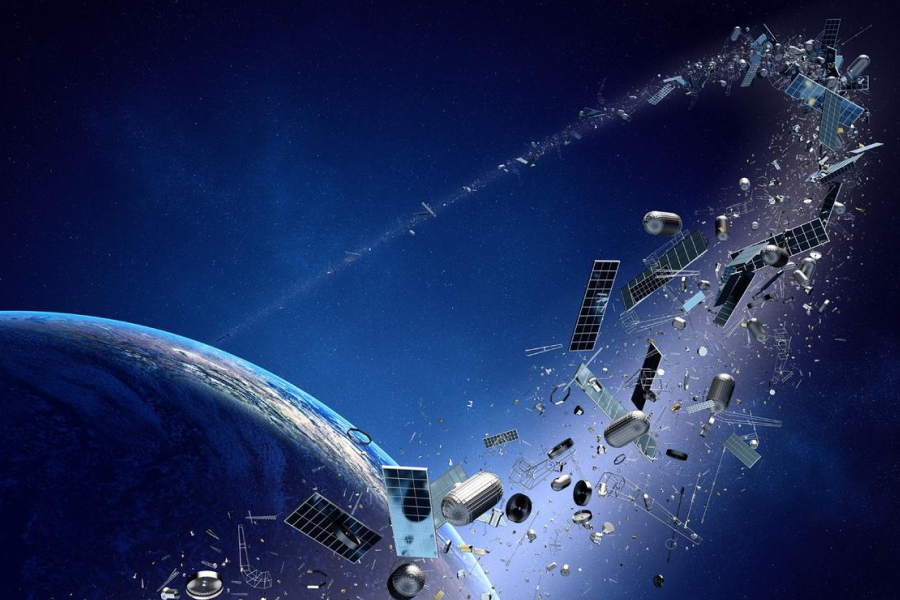
Thousands of active satellites. Tens of thousands of debris pieces. Everything moving at 27,000 kilometers per hour. A 1-centimeter piece of paint once cracked a space shuttle window. Now imagine a bolt. Or a broken solar panel.
The satellite traffic in space live trackers show near-misses daily. Most go unreported. Operators quietly move their satellites. No news. No drama.
But one wrong move changes everything. A collision creates thousands of new debris pieces. Each piece becomes a new threat. Kessler Syndrome. The nightmare scenario where debris makes orbit unusable.
Soft laws try to prevent this. They recommend collision avoidance maneuvers. They suggest data sharing. They encourage de-orbiting dead satellites.
None of it is mandatory. That scares me.
Space Traffic Management Companies: Who to Watch?
Several space traffic management companies are building real solutions. Here is my honest assessment.
LeoLabs tracks debris using ground-based radar. Their data is solid. I have used their public alerts. The company is a conference sponsor for 2026.
NorthStar Earth & Space takes a different approach. Satellite-based tracking. Watching from above instead of below. Also a conference sponsor.
Spacetalk offers the neutral platform I mentioned earlier. Their voluntary model is smart. No country controls it. No single company owns it.
Kayhan Space built Satcat. Best public-facing tool available.
Thales and Spire Global are doing something else entirely. They are building space-based air traffic surveillance . Over 100 satellites tracking planes from orbit. That launches in 2027. Different application. Same congestion problem.
Who is best? Depends on your needs.
For casual tracking: Satcat.
For professional data: LeoLabs.
For coordination: Spacetalk.
For nothing? Do nothing. Ignorance is riskier than ever.
Practical Advice: How to Track Safely
If you operate a satellite or just follow space news, here is my practical guidance.
Use multiple data sources. No single tracker catches everything. Combine Satcat with public TLE data from Space-Track.org.
Check conjunction reports daily. These show predicted close approaches. Most are false alarms. The one that is not will save your satellite.
Build relationships. Soft laws work better when you know the other operator. Exchange emails. Share phone numbers. Talk before a crisis.
Plan for failure. Assume tracking data will be wrong. Assume communication will fail. Have backup plans.
De-orbit responsibly. Do not be part of the problem. Every dead satellite is a future collision risk.
What the 2026 Conference Solved (And What It Did Not)
The Space Traffic Management conference 2026 made progress. Participants agreed on common data standards. They shared real near-miss data. They built personal relationships across competing nations .
But big problems remain.
No agreement on who moves first during a potential collision. No binding data-sharing requirements. No enforcement mechanism.
One attendee described it as "everyone agrees there is a problem. Nobody agrees on the solution."
That is where we stand in mid-2026.
Final Take: Soft Laws Are Not Enough
I started this article skeptical of space traffic management soft laws. After researching the 2026 conference, the EU Space Act, and live tracking tools, I am still skeptical. Soft laws are better than nothing. They build norms. They create dialogue. They prevent some collisions.
But they cannot solve the core problem. Space is getting crowded too fast. Regulations move too slow. The EU Space Act is a step toward hard laws. The US resistance shows how hard this will be. China and Russia are not even at the table.
If you operate satellites, do not wait for laws. Use the tools available now. Track everything. Share data voluntarily. De-orbit responsibly. If you are just curious? Watch satellite traffic in space live on Satcat. See the congestion yourself. It might change how you think about the night sky.
The stars are still beautiful. But between them, thousands of machines are racing. And right now, soft laws are the only thing keeping them apart.
That should worry all of us.